New Delhi, Feb 18 Observing that nepotism and self-aggrandizement are anathema to a democratic system, the Supreme Court has cancelled the allotment of two flats by a Haryana government housing society to a governing body member and his subordinate.
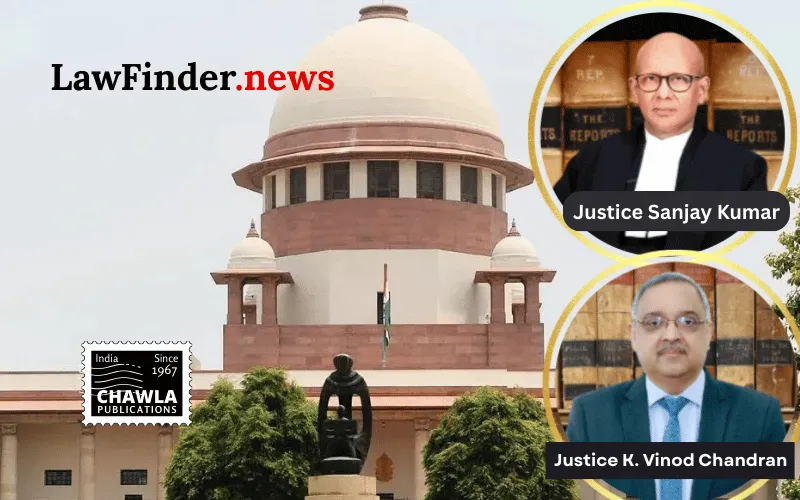
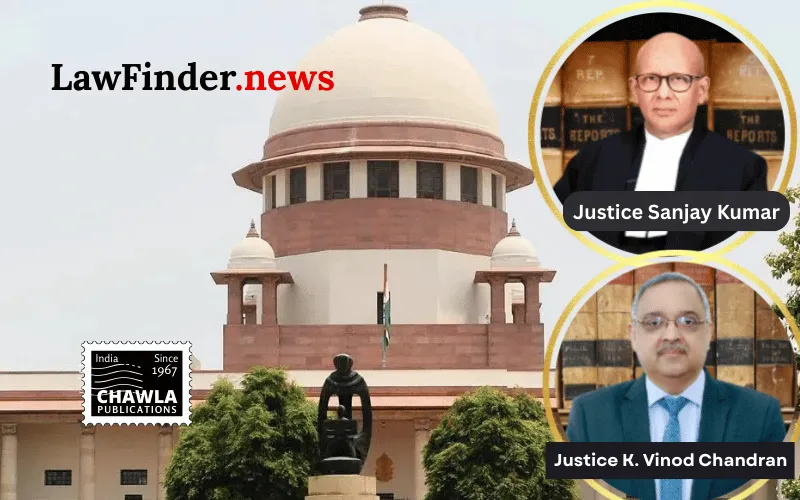
A bench of Justices Sanjay Kumar and K Vinod Chandran set aside an order of the Punjab and Haryana High Court which had refused to intervene in the allotment process.
It said the allotments made to a governing body member and his subordinate were arbitrary, biased, and violated the society’s own eligibility criteria.
"Nepotism and self-aggrandizement are anathema to a democratic system, more so when it happens within a society comprising members of the government service, enabling housing facilities to its members by transparent allotment," the bench said.
The top court was hearing a plea filed by one Dinesh Kumar, a member of the HUDA, Urban Estate and Town and Country Planning Employees Welfare Organisation (HEWO) challenging allotment of two high-end super deluxe flats.
Kumar challenged the allotment of the super deluxe flats to two persons alleging them to be ineligible and accusing HEWO of favouritism.
The top court said the appellant applied under the advertisement and was eligible on all counts, satisfying both the deputation period and the basic pay requirements.
"There could have been no preferential allotment given to the governing body member who was not even satisfying the six months deputation period in the service of HUDA. We find absolutely no reason to uphold the allotment made to the third respondent which is a clear act of favouritism and blatant display of self-aggrandizement," the bench said.
Considering the gross abuse of powers and authority carried out, the apex court set aside the judgment of the high court and imposed costs of Rs 1 lakh on HUDA with further costs of Rs.50,000 on the third respondent (BB Gupta) and costs of Rs 25,000 on the fourth respondent (Puran Chand).
"The second respondent (HUDA) shall pay Rs.50,000 to the appellant as litigation expenses and the balance shall be deposited with the Legal Services Committee of the Supreme Court, with whom the third and fourth respondents also shall deposit the costs imposed on them, within a period of two months.
"We make it clear that the costs imposed on the second respondent would be capable of recovery from the governing body members, except the 3rd respondent on whom we have separately imposed costs, which the second respondent would be entitled to proceed with after issuing notice to the members of the Governing Body, who took the decision for allotment," the bench said.
The top court made it clear that the entire amounts deposited by the third and fourth respondents shall be refunded to them within a period of one month without any interest and they shall vacate the premises within one month of the refund.
Dinesh Kumar v. State of Haryana, (SC) : Law Finder Doc Id # 2854334