Supreme Court Upholds Judicial Independence, Quashes Disciplinary Action Against Judge Supreme Court rules that disciplinary proceedings against judges must be based on clear misconduct evidence, not merely on judicial errors.
In a landmark decision, the Supreme Court of India has set aside the removal of a judicial officer, Nirbhay Singh Suliya, who was dismissed from service based solely on certain bail orders he passed. The apex court highlighted the importance of protecting judicial independence and ensuring that judges are not penalized for judicial discretion unless there is evidence of misconduct or corruption.
The case, Nirbhay Singh Suliya v. State of Madhya Pradesh, focused on the dismissal of Suliya, a judge with an unblemished 27-year career, who was removed after being accused of misconduct for granting bail in four instances without expressly citing Section 59-A of the Madhya Pradesh Excise Act. These orders were compared against other instances where he had rejected bail, leading to accusations of applying double standards.
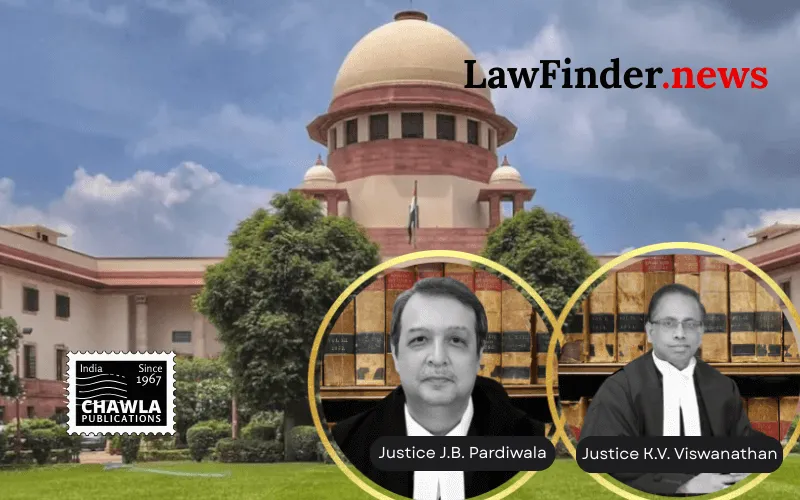
Justice K.V. Viswanathan, delivering the judgment, emphasized that judicial officers should not be subjected to disciplinary proceedings for incorrect orders unless there is evidence of an oblique motive or corrupt practices. The court noted that the complaint against Suliya was primarily against his stenographer and lacked specific allegations or evidence of bribery or misconduct.
The Supreme Court reiterated that judges must be allowed to exercise their discretion without fear of retribution, as this is crucial for maintaining the rule of law. The judgment also highlighted that suspicion alone cannot constitute misconduct, and disciplinary actions should only be initiated when there is substantial evidence.
Justice J.B. Pardiwala, concurring with the judgment, stressed that a mere wrong order or exercise of discretion in granting bail should not lead to departmental proceedings. He noted that the fear of administrative action often deters trial court judges from exercising their discretion, leading to an overload of bail applications in higher courts.
The Supreme Court directed that Suliya be reinstated with full back wages and benefits, marking a significant stance on protecting the judiciary from unfounded disciplinary actions. This decision serves as a reminder of the judiciary's role in upholding the rule of law and ensuring fair and independent judicial processes.
Bottom Line:
Disciplinary proceedings against judicial officers must be based on clear allegations of misconduct, extraneous influences, or illegal gratification, not merely on wrong judicial orders or exercise of discretion.
Statutory provision(s): Section 59-A of the Madhya Pradesh Excise Act, Rule 3 of M.P. Civil Services (Conduct) Rules, 1965, Rule 10 of the M.P. Civil Services (Classification, Control & Appeal) Rules, 1966
Nirbhay Singh Suliya v. State of Madhya Pradesh, (SC) : Law Finder Doc Id # 2833298