Supreme Court Upholds Forfeiture of Pension for Resigned Employee, Allows Gratuity and Leave Encashment, In a significant ruling, the Supreme Court clarifies the distinction between resignation and voluntary retirement, impacting pension entitlements under the Central Civil Services (Pension) Rules, 1972.
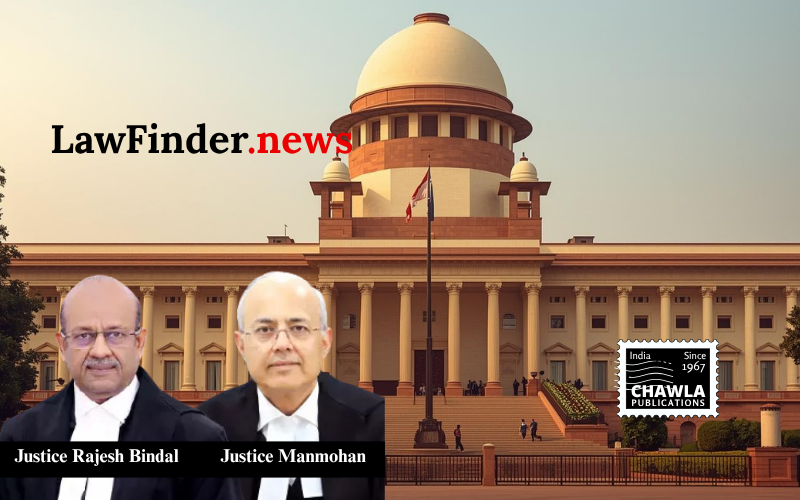
In a landmark decision, the Supreme Court of India has reaffirmed that employees who resign from service are not entitled to pension benefits, as per Rule 26 of the Central Civil Services (Pension) Rules, 1972. The judgment, delivered by the bench comprising Justices Rajesh Bindal and Manmohan, came in the case of Ashok Kumar Dabas v. Delhi Transport Corporation. The Court emphasized the clear distinction between resignation and voluntary retirement, impacting the pension entitlements of employees.
The appellant, Ashok Kumar Dabas, had resigned from his position as a conductor with the Delhi Transport Corporation in 2014 due to family circumstances. His request to withdraw the resignation was denied, leading to his claim for pensionary benefits being rejected by the Central Administrative Tribunal and subsequently by the Delhi High Court.
The Supreme Court, while denying the pension claim, acknowledged the appellant's entitlement to gratuity and leave encashment under the Payment of Gratuity Act, 1972. The Court clarified that gratuity is payable irrespective of resignation, provided the employee has rendered continuous service for not less than five years. The legal heirs of the deceased employee were deemed eligible for these benefits.
The Court's judgment highlighted that the forfeiture of past service upon resignation is a legal consequence outlined in Rule 26 of the Pension Rules. This distinction was reinforced by referencing earlier judgments, notably the case of BSES Yamuna Power Limited v. Ghanshyam Chand Sharma, which underscored the legal implications of resignation versus voluntary retirement.
The Supreme Court directed the Delhi Transport Corporation to release the gratuity and leave encashment dues to the legal heirs of Ashok Kumar Dabas within six weeks, along with an interest of 6% per annum from the date of resignation until payment.
This judgment serves as a crucial reference for employees and employers alike, delineating the boundaries of pension entitlements and reinforcing the statutory provisions governing resignations and retirements.
Bottom Line:
Pensionary benefits cannot be granted to an employee who has resigned from service as per Rule 26 of the Central Civil Services (Pension) Rules, 1972. However, gratuity and leave encashment can be claimed under the Payment of Gratuity Act, 1972.
Statutory provisions: Central Civil Services (Pension) Rules, 1972 - Rule 26, Payment of Gratuity Act, 1972 - Section 4
Ashok Kumar Dabas v. Delhi Transport Corporation, (SC) : Law Finder Doc id # 2819759