Presence of an officer who previously faced contempt proceedings initiated by the petitioner in a selection committee vitiates the proceeding. Supreme Court Quashes Biased Selection, Orders Reconstitution of ITAT Selection Committee SC upholds principles of natural justice, mandates exclusion of biased officer from ITAT selection process
In a landmark judgment, the Supreme Court of India has set aside the decision of the Search-cum-Selection Committee (SCSC) that rejected Captain Pramod Kumar Bajaj’s candidature for the post of Member (Accountant) at the Income Tax Appellate Tribunal (ITAT). The apex court, in its ruling dated January 30, 2026, highlighted a reasonable apprehension of bias due to the presence of an officer in the selection committee who had previously faced contempt proceedings initiated by Bajaj.
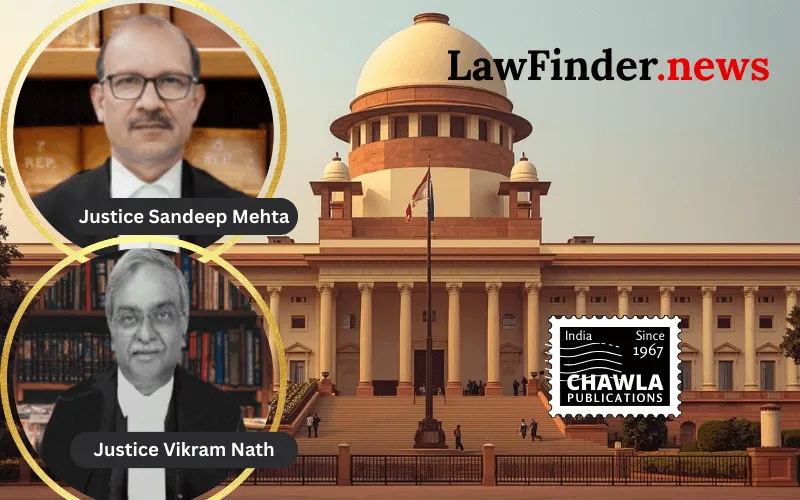
The judgment, delivered by Justices Vikram Nath and Sandeep Mehta, stems from a writ petition filed by Bajaj under Article 32 of the Constitution. The petitioner, a former member of the Armed Forces and a decorated officer in the Indian Revenue Service, alleged a vendetta-driven campaign against him, orchestrated by departmental officers following his top ranking in the SCSC evaluation.
The court noted, "The presence of an officer who previously faced contempt proceedings initiated by the petitioner in a selection committee vitiates the proceedings." It further observed that the selection process must be perceived as fair, and any reasonable apprehension of bias is sufficient to invalidate the decision-making process.
The court ordered the reconstitution of the SCSC, explicitly excluding the said officer from participating in the new proceedings. The court also directed the Department of Personnel and Training (DoPT) to convene a fresh meeting of the SCSC within four weeks to reconsider Bajaj’s candidature, with a further directive to communicate the outcome to him within two weeks thereafter.
In a scathing critique of the respondents' conduct, the Supreme Court imposed a cost of Rs. 5 lakhs on them for deliberate delay and creating obstacles in Bajaj’s appointment process, describing their actions as bordering on vendetta.
The case has been a protracted legal battle for Bajaj, who has faced multiple rounds of litigation due to alleged departmental harassment, including being placed under suspension and subjected to compulsory retirement, actions that were later overturned by the courts.
This judgment reaffirms the judiciary's commitment to upholding the principles of natural justice and ensuring that administrative processes are free from bias and prejudicial actions, thereby safeguarding the integrity of public appointments.
Bottom Line:
Principles of natural justice - Presence of an officer who previously faced contempt proceedings initiated by the petitioner in a selection committee vitiates the proceedings - Reasonable apprehension of bias is sufficient to invalidate the decision-making process.
Statutory provision(s): Article 32 of the Constitution of India, Doctrine of Bias, Principles of Natural Justice
Captain Pramod Kumar Bajaj v. Union of India, (SC) : Law Finder Doc Id # 2845748