Supreme Court Upholds Finality of Dismissed SLPs, Bars Repeated Appeals, Litigation Finality Reinforced; Kangra Central Cooperative Bank's SLP Dismissed to Prevent Judicial Process Abuse
In a significant judgment reinforcing the principles of litigation finality, the Supreme Court of India dismissed a Special Leave Petition (SLP) filed by Kangra Central Cooperative Bank Limited. The petition challenged an earlier decision of the Himachal Pradesh High Court, which had been previously upheld by the Supreme Court. The dismissal underscores the Court's firm stance against repeated attempts to contest the same judicial orders without explicit permission.
The case stemmed from a series of legal proceedings involving pension disputes between Kangra Central Cooperative Bank and its Pensioners Welfare Association. Initially, the High Court's single-judge bench ruled on the matter in 2012, with the decision being subsequently contested through various legal avenues. This included an appeal to the Division Bench of the Himachal Pradesh High Court, followed by multiple approaches to the Supreme Court.
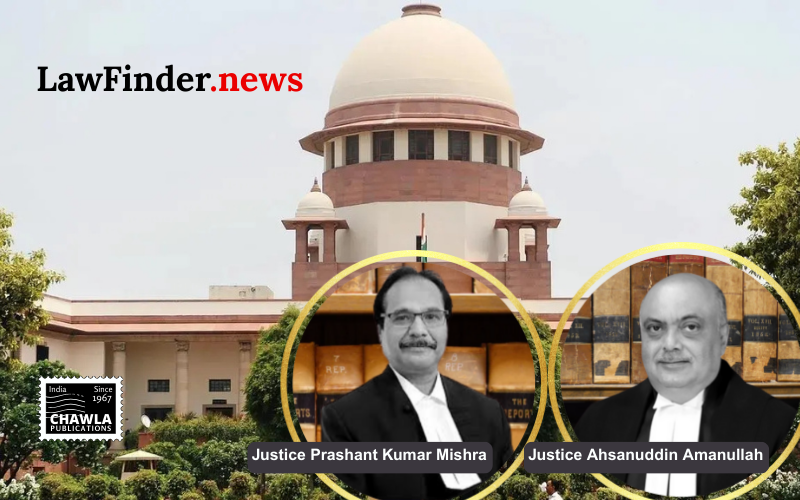
The Supreme Court, led by Justices Ahsanuddin Amanullah and Prashant Kumar Mishra, emphasized that once an SLP is dismissed without the liberty to re-approach, the same order cannot be challenged again. The Court highlighted that the principle of finality in litigation is essential to prevent abuse of the judicial process and to uphold public policy.
The judgment also touched upon procedural aspects, stating that a review petition is maintainable even after the dismissal of an SLP by a non-speaking order. However, if the review is refused, further appeal to the Supreme Court is barred unless specific liberty is granted. The Court cited several precedents, including "Kunhayammed v. State of Kerala" and "Bussa Overseas and Properties Private Limited v. Union of India," to support its decision.
In a bid to prevent further litigation, the Court limited the financial liability of the Kangra Bank to 141 pensioners and 45 spouses, amounting to approximately INR 30-35 crores, as opposed to the petitioner's claim of INR 250 crores. This decision, made under Article 142 of the Constitution, is not to be treated as a binding precedent.
The ruling serves as a reminder of the necessity to adhere to the principles of finality in litigation, ensuring that judicial resources are not squandered on repetitive legal battles. The Court's judgment aims to deter litigants from re-approaching the courts on settled matters, thereby preserving the integrity and efficiency of the legal system.
Bottom Line:
Non-maintainability of repeated SLPs - Once an SLP has been dismissed, and liberty to approach the court again is not granted, a party cannot file another SLP challenging the same order - Finality of litigation upheld to prevent abuse of process and ensure public policy.
Statutory provisions: Article 136, Article 142 of the Constitution of India, 1950; Order XLVII Rule 7(1) of the Civil Procedure Code, 1908.