The determination of the appointing authority is essential for assessing the validity of sanction. Supreme Court orders reassessment of prosecution sanction in Karnataka corruption case Supreme Court remands case to trial court to determine appointing authority and validity of prosecution sanction under Prevention of Corruption Act.
In a significant decision, the Supreme Court of India has remanded the case of T. Manjunath, a Senior Inspector of Motor Vehicles, back to the trial court to ascertain the validity of the sanction for prosecution under the Prevention of Corruption Act, 1988. The appeals, arising from a 2024 Karnataka High Court order, questioned the competence of the Transport Commissioner in granting prosecution sanction, arguing that it should have been accorded by the State Government, his appointing authority.
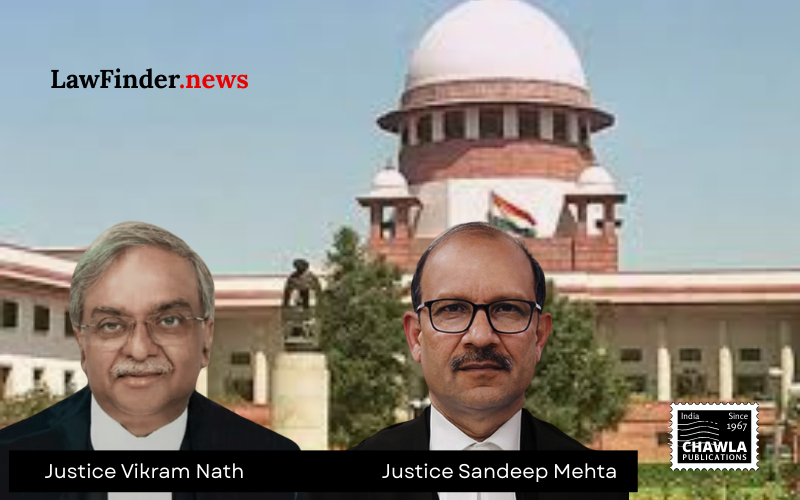
The Supreme Court, comprising Justices Vikram Nath and Sandeep Mehta, emphasized the necessity of determining the appointing authority to assess the legitimacy of the sanction. The court pointed out that the appointment authority's identification is critical, as Section 19 of the Prevention of Corruption Act mandates that prosecution sanction must be granted by the competent authority, which, in this context, is the appointing authority.
The case originated from allegations against Manjunath, accused of accepting a bribe of Rs.15,000 at the RTO office in K.R. Puram, Bengaluru. A trap laid by the Lokayuktha led to the registration of a corruption case, but the initial discharge by the trial court was overturned by the High Court, prompting the current appeal.
The Supreme Court also addressed the issue of departmental exoneration, clarifying that such exoneration does not automatically imply discharge in criminal proceedings, particularly in corruption cases where different standards of proof apply. Despite the departmental proceedings clearing Manjunath, the apex court insisted that the criminal trial should proceed independently.
In its analysis, the Supreme Court highlighted discrepancies regarding the appointing authority, with conflicting claims presented by the appellant and the state. To resolve this, the trial court is directed to scrutinize the original appointment documents to identify the legitimate appointing authority and reassess the validity of the prosecution sanction accordingly.
This decision underscores the judiciary's commitment to ensuring that procedural integrity is maintained in the prosecution of corruption cases, reinforcing the necessity for due process in sanction approvals. The remand allows the trial court to summon relevant records and decide whether the prosecution can proceed or if a fresh sanction is necessary.
The Supreme Court's directive ensures that the case against T. Manjunath will continue under appropriate legal scrutiny, safeguarding the principles of justice and accountability.
Bottom Line:
Sanction for prosecution under Section 19 of the Prevention of Corruption Act must be accorded by the appointing authority of the accused, and determination of the appointing authority is essential for assessing the validity of sanction.
Statutory provision(s): Prevention of Corruption Act, 1988 Section 19, Code of Criminal Procedure, 1973 Section 239
T. Manjunath v. State of Karnataka, (SC) : Law Finder Doc Id # 2812750