Delhi High Court Quashes ED's Freezing Orders on Poonam Malik's Bank Accounts Court Rules Freezing Orders Under PMLA Must Be Based on "Reason to Believe," Not Mere Suspicion
In a significant judgment, the Delhi High Court on November 14, 2025, quashed the freezing orders issued by the Directorate of Enforcement (ED) against Poonam Malik's bank accounts, citing procedural lapses and lack of compliance with statutory mandates under the Prevention of Money Laundering Act, 2002 (PMLA). The court emphasized that such orders must be grounded on a "reason to believe," supported by credible material, rather than mere suspicion.
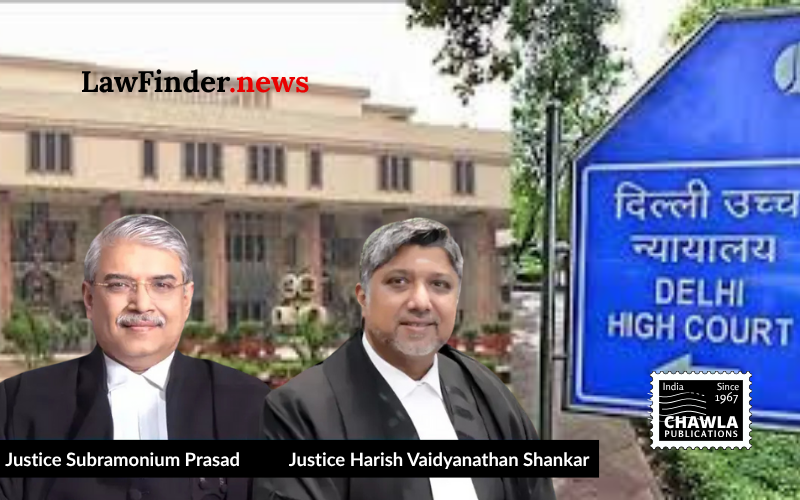
The division bench, comprising Justices Subramonium Prasad and Harish Vaidyanathan Shankar, upheld the Appellate Tribunal's decision, which had set aside the ED's freezing orders on the accounts held by Malik with Delhi State Co-operative Bank and ICICI Bank. The Tribunal had previously found these orders to be legally infirm and procedurally deficient.
The case stemmed from allegations against Malik's husband, Ranjit Malik, who was implicated in a massive bank fraud involving Sterling Biotech Limited. Despite being unlisted in the initial FIRs and ECIRs, the ED issued freezing orders suspecting the involvement of Malik's bank accounts in money laundering activities.
The High Court's judgment scrutinized the procedural framework under the PMLA, reiterating the necessity for adherence to statutory safeguards. It was noted that the ED's freezing orders lacked a detailed basis for "reason to believe," a critical requirement for such actions under Section 17 of the PMLA.
The judgment further clarified that the continuation of attachment or freezing under Section 8(3) does not prescribe a timeframe for completing investigations, correcting a misinterpretation by the Appellate Tribunal. The court reiterated that the statutory provisions are designed to balance the enforcement powers with individuals' rights, stressing that procedural safeguards serve as a check against arbitrary action.
The ruling also addressed the broader implications of freezing orders on individuals' constitutional right to property under Article 300A, emphasizing that any deprivation of property must adhere to legal authority and procedural fairness.
The court's decision underscores the judiciary's role in ensuring that enforcement actions under the PMLA are executed within the bounds of law, safeguarding individuals' rights against disproportionate and unwarranted intrusions.
Bottom Line:
Freezing orders under the Prevention of Money Laundering Act, 2002 (PMLA) must be based on "reason to believe" and comply with procedural safeguards. Orders based solely on suspicion are legally infirm and cannot be sustained.
Statutory provision(s): Prevention of Money Laundering Act, 2002 Sections 17(1A), 8(3), 17(4), Constitution of India, 1950 Article 300A.
Directorate of Enforcement v. Poonam Malik, (Delhi)(DB) : Law Finder Doc Id # 2808569