Court Affirms Limited Jurisdiction in Scheme-Based Appointments, Directs Appellant to Seek Alternative Remedies
In a significant ruling, the Patna High Court on April 9, 2026, dismissed an intra-court appeal by Ram Dulari Devi challenging her non-selection as an Anganwadi Sevika. The appeal was against the judgment and order dated February 10, 2023, by a Single Judge in the Civil Writ Jurisdiction Case No. 10524 of 2017, which had dismissed her writ petition.
The case revolved around the selection process for the position of Anganwadi Sevika at Anganwari Centre No. 153 in Madhepura District, Bihar. Devi, the appellant, claimed that she was more qualified and supported by the majority of beneficiaries, yet her candidature was overlooked in favor of Respondent No. 10, who she argued was ineligible due to residency issues and procedural irregularities.
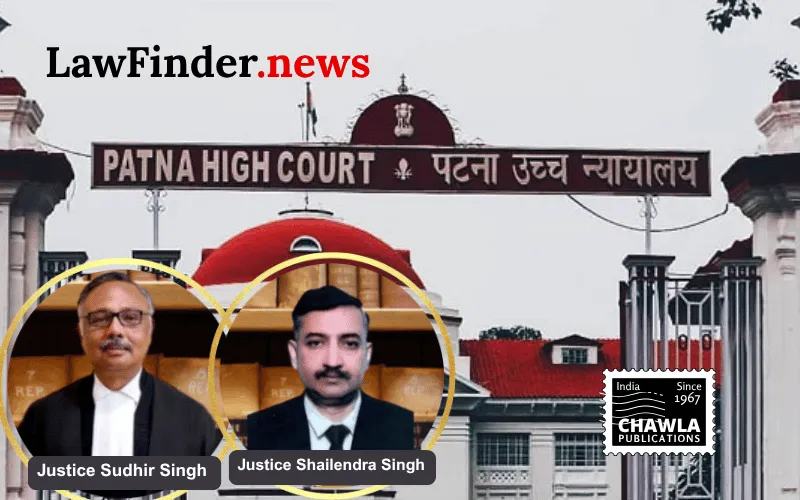
The Division Bench, comprising Justices Sudhir Singh and Shailendra Singh, upheld the Single Judge's decision, emphasizing that the selection of Anganwadi workers is part of a government welfare scheme and does not constitute a statutory appointment. As such, it does not confer enforceable statutory rights, limiting the scope for judicial review under Article 226 of the Constitution of India.
The court cited established legal precedents, including the Supreme Court judgment in State of Karnataka v. Ameerbi, reiterating that Anganwadi workers do not hold civil posts and their appointments are governed by executive instructions rather than statutory rules. Consequently, disputes regarding their selection are not typically subject to writ jurisdiction.
Furthermore, the court highlighted that alternative remedies are available for the appellant, suggesting that she could approach the competent authority or a Civil Court for redressal of her grievances. The bench clarified that the writ petition was not maintainable, as it did not involve any violation of statutory provisions or enforceable legal rights.
In conclusion, the court dismissed the intra-court appeal, affirming the limited jurisdiction of writ petitions in scheme-based appointments and encouraging the appellant to pursue alternative legal avenues.
Bottom Line:
Selection of Anganwadi Sevika under government welfare schemes does not confer any statutory right enforceable under writ jurisdiction. Judicial review in such cases is extremely limited and confined to instances of clear statutory violations.
Statutory provision(s):
Article 226 of the Constitution of India
Ram Dulari Devi v. State of Bihar, (Patna)(DB) : Law Finder Doc id # 2887897