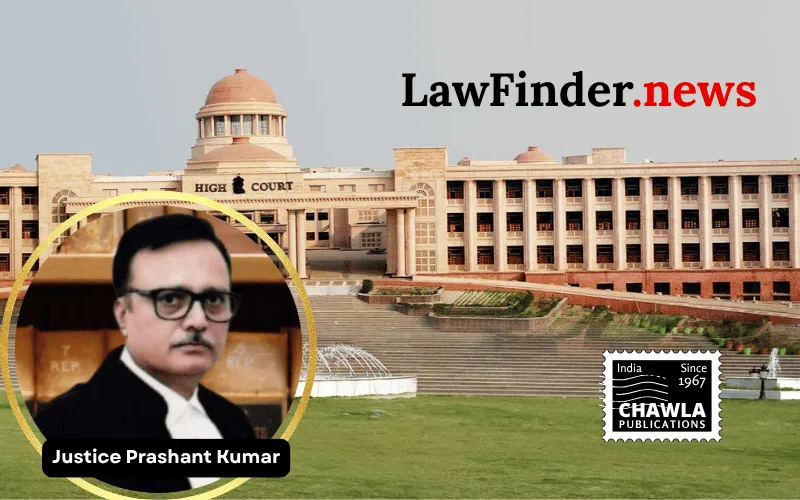
Lucknow, May 30 The Allahabad High Court has held that the mere fact that general people have been visiting a temple does not establish the public character of a trust managing it.
Justice Prashant Kumar said this on Friday while dismissing two pleas claiming that the Shri Ram Laxman-Janki Virajman Temple Trust was a public religious trust and that intervention in its administration could be sought under Section 92 of the Code of Civil Procedure.
The CPC's Section 92 governs public charitable and religious trusts. It provides a legal mechanism for courts to intervene, remove trustees, or establish administrative schemes in cases of breach of trust.
The dispute concerned the management of the trust and the appointment of its 'sarvarahkar' (manager).
Challenging a 2022 trial court order, the appellants had contended that the temple was a public religious trust and that intervention in its administration, including the appointment of a new manager, could be sought under Section 92 of the CPC.
The trust, on the other hand, argued that the temple and the trust had been established by Gulzari Lal within his residential premises and had always been administered according to a private scheme formulated by the founder.
In its judgement, the court held that public access to a temple for worship is not, by itself, sufficient to establish the public character of a trust.
It found that control and management of the trust had remained with the founder and his successors, and that the trust properties were dedicated to the maintenance of the temple.
Accordingly, the court concluded that the trust was private in nature.
The court further clarified that Section 92 of the CPC applies only to public religious or charitable trusts. Since the trust in question was a private trust, the suit filed under the provision was not maintainable.
The court noted that Shiv Gopal had already been recognised as the lawful manager of the trust in earlier proceedings and those decisions had attained finality.
It also observed that no member of the trust committee had objected to Shri Narayan succeeding him as manager.
The court held that the issue relating to the office of the manager had already been judicially determined and was therefore barred by the principle of res judicata, which prevents re-litigation by the same parties of matters already decided.