Supreme Court Orders Release of Juvenile Convicted in 2004 Murder Case Apex Court Upholds Juvenile Justice Act, Directs Immediate Release After 18 Years of Incarceration
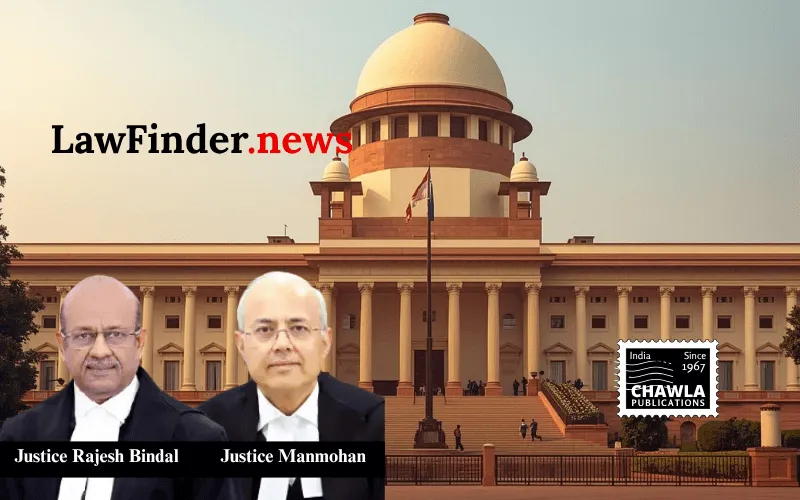
In a landmark judgment, the Supreme Court of India has ordered the immediate release of Mushahid, who was convicted in a 2004 murder case, after being declared a juvenile at the time of the crime. The decision, delivered by a bench comprising Justices Rajesh Bindal and Manmohan, underscores the enduring principle within the Juvenile Justice (Care and Protection of Children) Act, 2015, that the plea of juvenility can be raised at any stage of legal proceedings.
Mushahid, initially sentenced to death by a trial court and later commuted to life imprisonment by the High Court, spent more than 15 years in prison. The Supreme Court, however, recognized the appellant as a juvenile on the date of the offense, as determined by the Juvenile Justice Board, District Amroha. The Board's declaration, which was not contested further, confirmed Mushahid's age as 16 years, 8 months, and 13 days at the time of the crime, thus entitling him to the protections afforded under the juvenile justice framework.
This case, documented as Criminal Appeal No. 5491 of 2025, highlights the robust application of the Juvenile Justice Act, as the Supreme Court reiterated the established legal doctrine that juvenility can be claimed at any point during or after the conclusion of judicial proceedings. The Court's order specifically referred to the precedent set in "Hansraj v. State of Uttar Pradesh, 2025 INSC 1211," further solidifying the legal standing of juvenility pleas.
The Supreme Court's decision follows a complex judicial journey for Mushahid. Post-conviction, his application for juvenile status was initially rejected by the Juvenile Justice Board in 2021 and subsequently dismissed by the Additional District & Sessions Judge. However, a High Court revision in 2022 remanded the case back to the Juvenile Justice Board, leading to the eventual recognition of his juvenility in 2024.
Acknowledging the appellant's extended period of incarceration and the finality of the juvenile status declaration, the Supreme Court mandated his immediate release, thereby overturning the High Court's prior orders. The judgment not only reinforces the statutory rights of juveniles but also reflects the judiciary's commitment to upholding justice through the lens of age-appropriate legal remedies.
Bottom Line:
Juvenility - Plea of juvenility can be raised by an accused or a convict at any stage of proceedings, even after conclusion of the proceedings.
Statutory provision(s): Juvenile Justice (Care and Protection of Children) Act, 2015 Sections 9, 7A
Mushahid v. State of Uttar Pradesh, (SC) : Law Finder Doc Id # 2825371