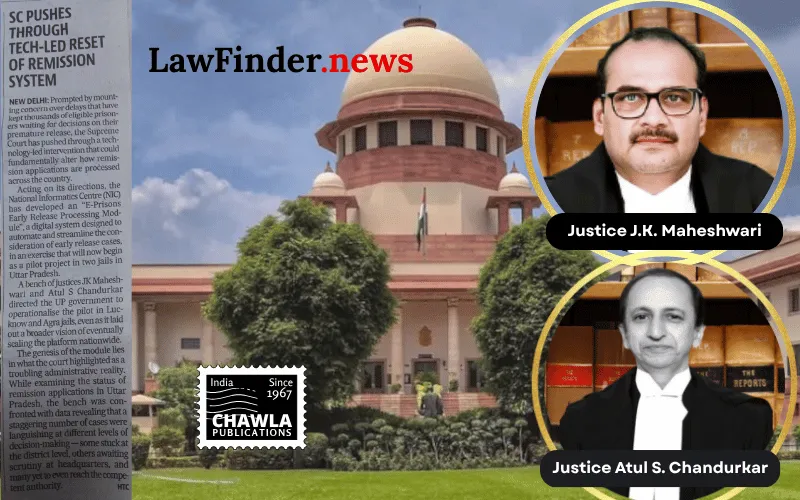
Supreme Court Mandates Automated System for Processing Premature Release Applications, New software to streamline prisoner release procedures in Uttar Pradesh, with potential for nationwide application
In a landmark decision, the Supreme Court of India has directed the State of Uttar Pradesh to implement an automated software system for processing premature release applications of life convicts. This directive aims to enhance efficiency, transparency, and adherence to established policies, potentially setting a precedent for nationwide adoption.
The case, titled Surendra @ Sunda v. State of Uttar Pradesh, revolved around the premature release of life convicts. The Supreme Court, with Justices J.K. Maheshwari and Atul S. Chandurkar presiding, noted significant delays and inconsistencies in the handling of such applications. The Court emphasized the necessity for a digital solution to address these issues, directing the development of a software module to automate the process.
This decision followed a series of hearings and affidavits revealing administrative delays and lapses in the remission process. The Court observed that a considerable number of applications for premature release were pending at various stages, causing undue delays in the justice process. The new system aims to initiate the processing of premature release applications automatically, based on eligibility, and ensure timely decision-making.
The software, developed in collaboration with the National Informatics Centre (NIC), will be piloted in Central Jail, Agra, and District Jail, Lucknow. It incorporates several innovative features, including automatic initiation of the release process, routine updates to prisoners and their guardians, and a centralized monitoring system to track application progress and stakeholder accountability.
Furthermore, the Court has involved the State Legal Services Authorities and District Legal Services Authorities in monitoring compliance and assisting convicts in challenging adverse decisions. The initiative is expected to streamline communication and data-sharing across departments, thereby reducing procedural delays and enhancing transparency.
The Supreme Court has also directed the State to ensure adequate human resources and technical support for the system's implementation. The Court expressed hope that this initiative would pave the way for similar systems across India, ensuring equitable and efficient justice delivery for all convicts eligible for premature release.
The judgment is seen as a significant step towards reforming the criminal justice system in India, highlighting the judiciary's proactive role in facilitating policy execution and technological integration in legal processes.
Bottom Line:
Supreme Court directs the development and implementation of an automated software system for processing premature release applications of prisoners, ensuring efficiency, transparency, and compliance with established policies across the State of Uttar Pradesh, with potential for nationwide implementation.
Statutory provision(s): Indian Penal Code, 1860, Section 302; Criminal Procedure Code, 1973, Section 432; Constitution of India, 1950, Article 161
Surendra @ Sunda v. State of Uttar Pradesh, (SC) : Law Finder Doc id # 2888516