Supreme Court Grants Interim Bail to UAPA Accused Amidst Delay Concerns, Supreme Court highlights constitutional balance between personal liberty and statutory restrictions under UAPA, orders interim bail for appellants pending further legal review.
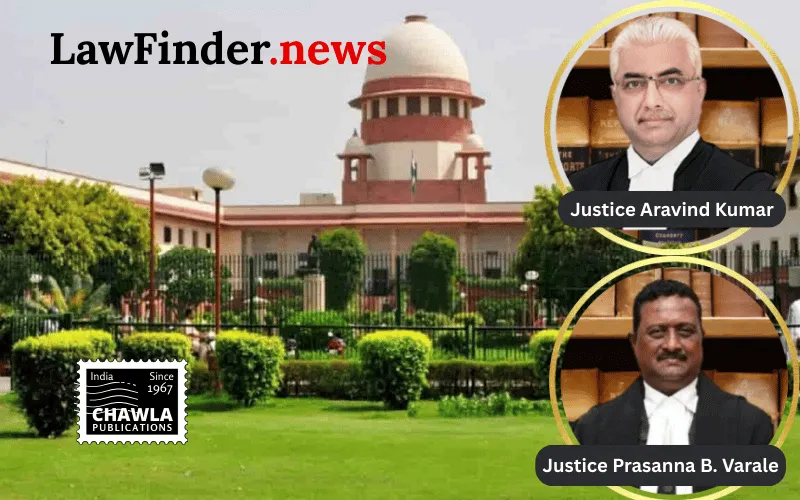
In a significant decision, the Supreme Court of India has granted interim bail to the appellants in the case of Tasleem Ahmed v. State Govt. of NCT of Delhi, addressing the critical issue of prolonged incarceration and the delay in trial under the Unlawful Activities (Prevention) Act, 1967 (UAPA). The judgment, delivered on May 22, 2026, by a bench comprising Justices Aravind Kumar and Prasanna B. Varale, underscores the constitutional courts' jurisdiction to grant bail despite the statutory restrictions imposed by Section 43D(5) of the UAPA.
The court acknowledged the tension between the legislative policy of stringent bail conditions under UAPA and the fundamental right to personal liberty enshrined in Article 21 of the Indian Constitution. It emphasized that while the statutory restrictions are significant, they must not render the constitutional guarantee of personal liberty illusory. The Supreme Court clarified that the presence of delays in trial proceedings should not mechanically result in bail, yet prolonged detention without the likelihood of a timely trial conclusion must be considered critically.
Recognizing the need for authoritative resolution on this matter, the court has directed the registry to place the papers before the Chief Justice of India to constitute an appropriate bench. This bench will address the broader legal questions regarding the intersection of Article 21, prolonged incarceration, and statutory restrictions under special statutes like UAPA.
While granting interim bail, the Supreme Court imposed stringent conditions on the appellants, including the execution of a personal bond, surrender of passports, restricted movement, and prohibition against influencing witnesses or tampering with evidence. The trial court has been directed to conduct the proceedings expeditiously, with all parties expected to cooperate fully.
This judgment follows a backdrop of judicial discussions, including references to previous decisions such as Union of India v. K.A. Najeeb and Gulfisha Fatima v. State, highlighting the ongoing debate on the application of Article 21 in cases involving special statutes with restrictive bail provisions.
The Supreme Court's decision to grant interim bail, coupled with a call for a larger bench to address these complex legal questions, marks a pivotal moment in balancing individual rights and legislative objectives in the context of national security and public order.
Bottom Line:
Prolonged incarceration and delay in trial under UAPA can be considered for bail despite statutory restrictions under Section 43D(5), balancing Article 21 and legislative policy.
Statutory provision(s): Unlawful Activities (Prevention) Act, 1967 Section 43D(5), Constitution of India, 1950 Article 21
Tasleem Ahmed v. State Govt. of NCT of Delhi, (SC) : Law Finder Doc id # 2904843