Gagandeep Singh and Others Acquitted as Court Recognizes Compromise in Predominantly Private Dispute
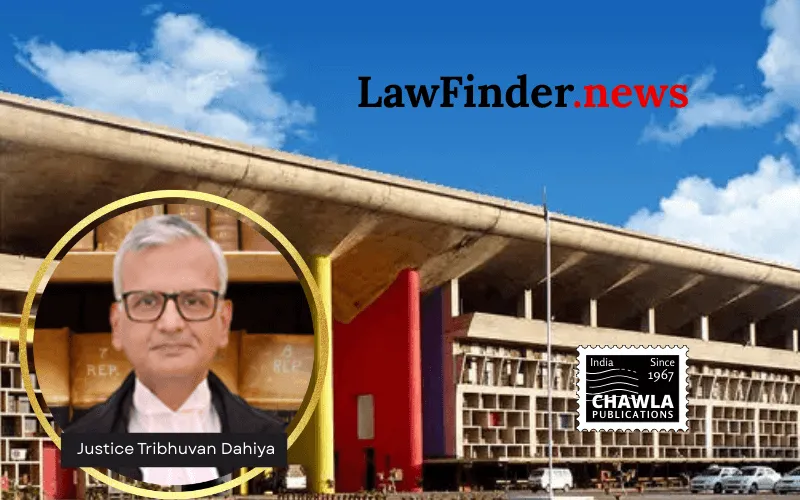
In a significant decision, the Punjab and Haryana High Court, presided over by Justice Tribhuvan Dahiya, has quashed the conviction and ongoing criminal proceedings against Gagandeep Singh alias Gaganpreet Singh and other petitioners. This decision follows an amicable resolution of disputes that had been pending since 2013.
The petitioners, represented by a team of advocates led by Dr. Anmol Rattan Sidhu, sought relief under Section 528 of the Bharatiya Nagarik Suraksha Sanhita, 2023, a provision corresponding to Section 482 of the Code of Criminal Procedure (Cr.P.C.), which empowers the High Court to quash criminal proceedings when a compromise is reached in disputes of a civil character.
The case, initially registered under several sections of the Indian Penal Code and the Scheduled Castes and Scheduled Tribes (Prevention of Atrocities) Act, 1989, stemmed from a private dispute that has since been resolved through a compromise dated February 4, 2026. The court acknowledged the settlement as bona fide and devoid of any coercion, citing a report from the Chief Judicial Magistrate of Tarn Taran.
The judgment draws upon precedents set by the Supreme Court of India, including the landmark cases of Gian Singh v. State of Punjab and State of Madhya Pradesh v. Laxmi Narayan, which support the quashing of criminal proceedings in cases where parties resolve disputes amicably.
Justice Dahiya noted that the allegations did not constitute heinous crimes or societal offenses. The court highlighted the petitioners’ lack of criminal antecedents and the non-heinous nature of the offenses, which were primarily private and civil. The court emphasized the necessity of quashing the proceedings to ensure the peaceful coexistence of the involved parties, which would otherwise be disrupted by prolonged litigation.
The decision effectively nullifies the judgment of conviction dated September 10, 2025, and the related orders of sentence, while also quashing the FIR registered in 2013. This ruling underscores the judiciary's role in facilitating justice by prioritizing reconciliation and compromise in cases of a civil nature.
Bottom Line:
Criminal proceedings, including judgments of conviction and FIRs, arising out of private disputes can be quashed when the parties have resolved their disputes amicably through compromise, as per the inherent jurisdiction of the High Court under Section 482 Cr.P.C. or Section 528 of Bharatiya Nagarik Suraksha Sanhita, 2023.
Statutory provision(s):
- Bharatiya Nagarik Suraksha Sanhita, 2023, Section 528
- Indian Penal Code, 1860, Sections 323, 354, 506, 148, and 149
- Scheduled Castes and Scheduled Tribes (Prevention of Atrocities) Act, 1989, Sections 3(i)(x), 3(I), and 4