Court Directs State to Reconsider Medical Reimbursement Policies, Emphasizing Constitutional Right to Health Under Article 21
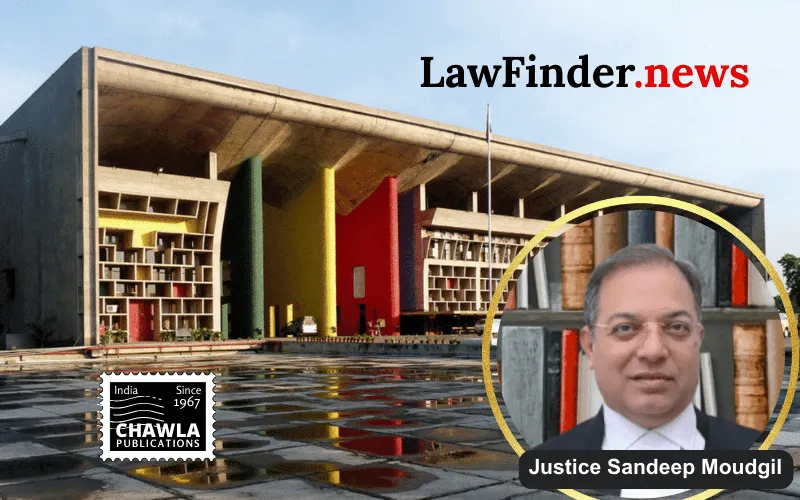
In a landmark judgment, the Punjab and Haryana High Court, presided over by Justice Sandeep Moudgil, issued a decisive ruling that bolsters the right to health and medical care as integral to the right to life under Article 21 of the Indian Constitution. The court delivered its verdict on May 29, 2026, addressing a series of writ petitions concerning the denial of medical reimbursements for emergency treatments received in non-empanelled hospitals.
The court emphasized that medical reimbursement policies must be interpreted liberally and purposively, ensuring that genuine claims for emergency treatment are not denied on the grounds of non-empanelment. This decision aligns with precedents set by the Supreme Court and other High Courts, including the notable cases of Shiv Kant Jha v. Union of India and State of Madhya Pradesh v. M.P. Ojha.
The petitions were filed by several individuals against the State of Haryana, challenging the denial of reimbursements solely because the treatments were obtained in non-recognized hospitals. Justice Moudgil underscored that such denial contravenes the constitutional mandate of Article 21, which guarantees the right to health and medical care.
The judgment highlighted that the State's policies on medical reimbursement should not be rigid or obstructive but should serve the cause of justice and social welfare. The court observed that the reimbursement policies should align with contemporary medical realities, escalating healthcare costs, and constitutional compassion to ensure that employees and pensioners are not financially devastated by illness.
The court directed the State to pay interest at 6% per annum on delayed reimbursements from the date the amount became due until its actual realization. Furthermore, the State was urged to reconsider its medical reimbursement policies to reflect current economic realities and ensure accessibility to healthcare without undue financial burden on its employees and pensioners.
In response, the State Counsel informed the court that the government had constituted a committee to review the medical reimbursement policies and address the grievances raised. The committee, chaired by the Additional Director of Health Services, is tasked with independently and sympathetically examining the claims of each petitioner.
The court ordered the committee to deliver well-reasoned decisions on each case within four weeks of receiving the court's order, ensuring that the policies advance the remedial purpose and social welfare envisioned by the Constitution.
This judgment reaffirms the judiciary's role in safeguarding constitutional rights and ensuring that state policies align with the principles of justice and human welfare.
Bottom line:-
Medical reimbursement policies must be interpreted liberally and purposively, ensuring that genuine claims for emergency treatment in non-empanelled hospitals are not denied on technical grounds, upholding the constitutional mandate of Article 21 for the right to health and medical care.
Statutory provision(s): Article 21 of the Constitution of India, Medical reimbursement policies, Supreme Court and High Court precedents.
Swati Yadav v. State of Haryana, (Punjab And Haryana) : Law Finder Doc id # 2920609