Decision to refrain from implementing 10% EWS reservation in Punjab University courses deemed a policy matter, not subject to judicial interference.
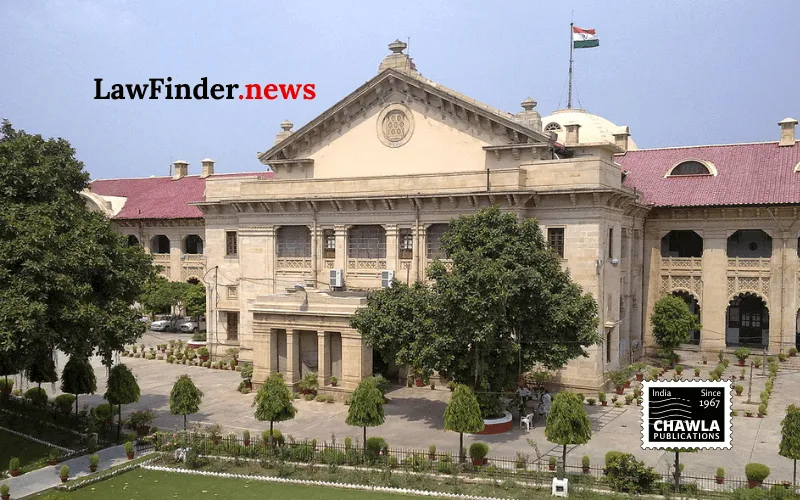
In a significant ruling, the Punjab and Haryana High Court dismissed a writ petition challenging the State of Punjab's decision not to implement the 10% reservation for Economically Weaker Sections (EWS) in educational institutions, including the LL.B. 3-Year Course at Punjab University for the academic session 2025-2026. The judgment, delivered by Justice Ashwani Kumar Mishra and Justice Rohit Kapoor, underscores the court's stance that such decisions fall within the state's policy domain and are not subject to judicial interference.
The petitioner, Puneet Singh, represented by Advocate J. S. Virk, sought a mandamus commanding the university to apply the EWS reservation as per the 103rd Constitutional Amendment Act, 2019. However, the court concurred with the State's argument, presented by Senior Panel Counsel Gurmeet Kaur Gill and other legal representatives, that the amendment merely enables states to make provisions for EWS reservation and does not mandate it.
The bench relied heavily on previous judgments, notably the Division Bench ruling in Vyom Yadav v. Union of India, which had been upheld by the Supreme Court, thereby reinforcing the principle of non-interference in policy decisions. The judgment clarified that the state's decision not to implement the EWS reservation is a conscious policy decision, a domain where the court has no authority to intervene.
The petitioner argued that the previous judgments did not consider Section 72 of the Punjab Reorganization Act, 1966, but the court dismissed this contention, noting that the Act's provisions had been adequately addressed in the Vyom Yadav case.
This ruling aligns with the court's consistent approach of deferring to state policy unless there is a clear violation of statutory or constitutional mandates. It highlights the judiciary's respect for the separation of powers and the autonomy of state governments in policy-making.
The dismissal of the writ petition reaffirms the judiciary's position that policy decisions, particularly those related to educational reservations, remain within the exclusive purview of the state government, unless overridden by higher judicial authority or legislative amendments. The judgment marks a definitive stance on the non-implementation of EWS reservations in Punjab's educational framework, setting a precedent for similar cases in the future.
Bottom Line:
The State's policy decision not to implement 10% EWS reservation in educational institutions under the 103rd Constitutional Amendment Act, 2019 cannot be interfered with, as it lies within the policy domain of the State.
Statutory provision(s): 103rd Constitutional Amendment Act, 2019, Punjab Reorganization Act, 1966
Puneet Singh v. Union of India, (Punjab And Haryana)(DB) : Law Finder Doc Id # 2802036