Court Overrules Trial Court's Decision, Emphasizes Technological Facilitation for Justice
In a significant ruling, the Punjab and Haryana High Court has overturned a lower court's decision, allowing the testimony of an elderly witness to be recorded via video conferencing. This decision came in response to a revision petition filed by Ashwani Kumar Sharma, who challenged the trial court's order denying the application for video conferencing testimony in a succession and inheritance case.
The case involves a disputed Will dated December 21, 1979, concerning the estate of Smt. Prabha Kanta Sharma. The petitioner, Ashwani Kumar Sharma, argued the necessity of recording the testimony of Dr. Plom Khurana, an attesting witness to the Will, via video conferencing. Due to her advanced age and personal medical circumstances, Dr. Khurana was unable to travel from Gurugram to Chandigarh to testify in person.
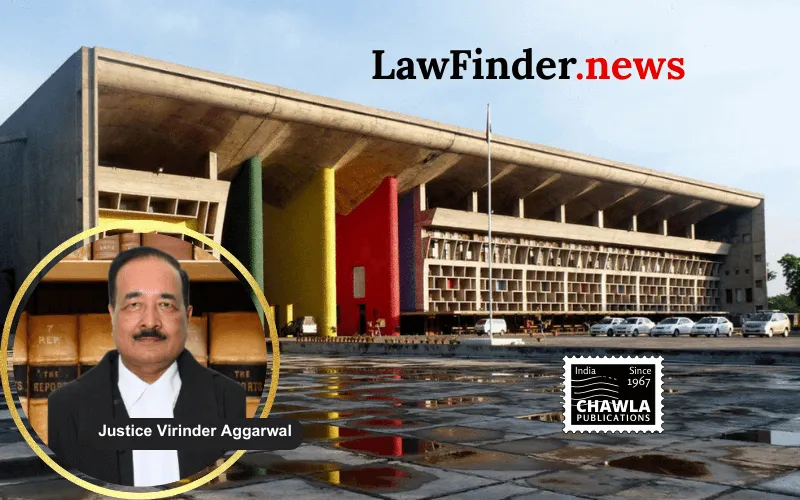
Justice Virinder Aggarwal, presiding over the matter, highlighted the importance of leveraging video conferencing technology to facilitate justice, particularly when witnesses face compelling personal or medical challenges. He criticized the trial court for its mechanical dismissal of the application without adequately considering the established Video Conferencing Rules and the technological infrastructure available to ensure access to justice.
The High Court underscored the procedural framework provided by the Video Conferencing Rules, which allow for witness examination through virtual means when justified by circumstances such as advanced age or medical conditions. The court noted that the trial court had erred in its failure to recognize the validity of the request for video conferencing and emphasized that such procedural mechanisms are designed to prevent undue hardship to litigants or witnesses while maintaining the integrity of the judicial process.
The High Court directed the trial court to proceed with the recording of Dr. Khurana's testimony via video conferencing, ensuring compliance with the relevant rules and procedures. The court also clarified that the decision was limited to the procedural issue at hand and did not reflect any opinion on the substantive merits of the underlying dispute.
This ruling reinforces the judiciary's commitment to modernizing legal procedures and enhancing access to justice through the use of technology, setting a precedent for future cases where video conferencing may be necessary due to similar circumstances.
Bottom line:-
Video conferencing can be utilized for recording the testimony of witnesses, particularly when the witness is of advanced age or faces compelling personal or medical circumstances. Courts must consider the Rules governing video conferencing and the available technological infrastructure to ensure access to justice and avoid undue hardship to litigants or witnesses.
Statutory provision(s): Article 227 of the Constitution of India, Video Conferencing Rules
Ashwani Kumar Sharma v. Rama Rani Sharma, (Punjab And Haryana) : Law Finder Doc id # 2910370