Conviction Overturned Due to Lack of Evidence and Misinterpretation of Statutory Provisions
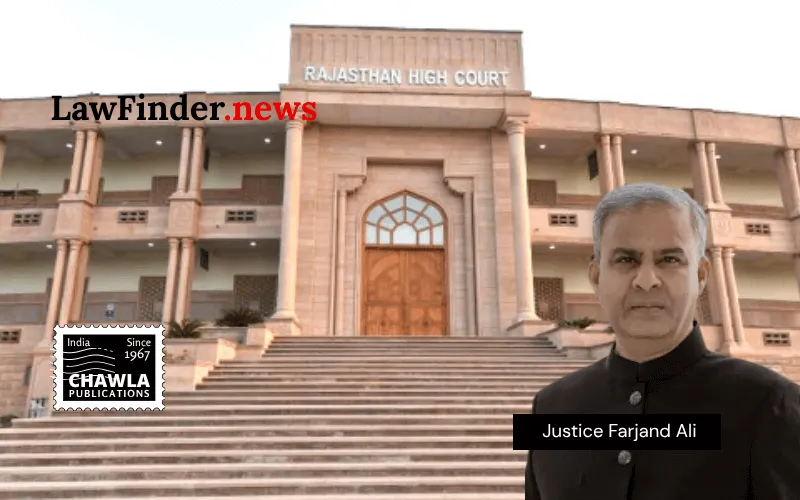
In a significant judgment delivered by the Rajasthan High Court, Himmat Singh was acquitted of charges under Sections 3/7 of the Essential Commodities Act, 1955. The judgment, delivered by Justice Farjand Ali, highlighted critical procedural lapses and the absence of statutory notification required to classify gas regulators as essential commodities.
The case against Himmat Singh was initiated at the Mahamandir Police Station, where he was accused of possessing 38 gas regulators without a valid license, leading to his conviction under the Essential Commodities Act by the Special Judge, EC Act Cases, Jodhpur, on October 31, 1998. The trial court sentenced him to three months of rigorous imprisonment and imposed a fine of Rs. 1,000. The conviction was based on the alleged unauthorized possession of gas regulators deemed to be essential commodities.
Justice Ali's judgment meticulously dissected the statutory framework, emphasizing that gas regulators are merely accessories used with liquefied petroleum gas and do not fall within the ambit of essential commodities unless expressly declared so by a statutory notification under Section 2(a) of the Essential Commodities Act, 1955. The prosecution's failure to produce any such notification or statutory instrument was a pivotal factor in the court's decision to overturn the conviction.
The judgment further pointed out the lack of scientific or technical verification of the seized articles, which were never tested to confirm their nature as gas regulators or their functionality. This absence of evidence undermined the prosecution's case, as it could not conclusively categorize the recovered items as regulated commodities, thereby invalidating the necessity for a license.
Additionally, procedural irregularities were highlighted in the recovery process. The seizure was conducted in an open public place without compliance with Section 100 of the Criminal Procedure Code, and the absence of corroborative independent witnesses further compromised the reliability of the recovery proceedings. The court noted contradictions in the testimonies of police witnesses, which raised doubts about the credibility of the evidence presented.
The principle of parity was another crucial aspect of the judgment. A co-accused, Yatendra Kumar, was acquitted on identical allegations and evidence. The court found no substantive distinction in the cases of the two accused, despite the numerical difference in the quantity of regulators seized, as the essential nature of the commodity itself was unproven.
In conclusion, the Rajasthan High Court's judgment underscores the importance of adhering to statutory mandates and evidentiary standards in criminal prosecutions. It serves as a reminder of the judiciary's role in safeguarding legal principles and ensuring justice is served. Himmat Singh's conviction was deemed legally unsustainable, resulting in his acquittal, and the court ordered the refund of any fine paid by him.
Bottom Line:
Essential Commodities Act - Gas regulators cannot be classified as "essential commodities" under Section 2(a) of the Act in the absence of statutory notification or control order by the Central Government. Conviction based on unproven nature and functionality of recovered articles vitiated.
Statutory provision(s): Essential Commodities Act, 1955 Sections 2(a), 3, 7; Criminal Procedure Code, 1973 Section 100.
Himmat Singh v. State of Rajasthan, (Rajasthan) : Law Finder Doc Id # 2822861