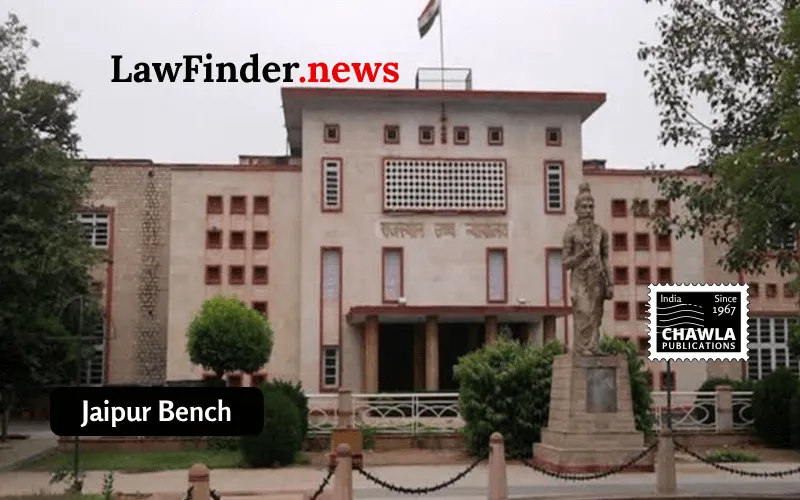
Acquittal in Criminal Cases Does Not Ensure Automatic Reinstatement; Disciplinary Authorities Must Reassess Dismissal Decisions
In a pivotal judgment, the Rajasthan High Court has ruled that government employees dismissed due to criminal convictions are not automatically entitled to reinstatement following acquittal. The decision came in response to a writ petition filed by Rohitashva Kumar Daila, challenging his suspension and subsequent dismissal from service after a criminal conviction that was later overturned by an appellate court.
Justice Munnuri Laxman, presiding over the Jaipur Bench, emphasized that the reinstatement of a dismissed employee is contingent upon the disciplinary authority's reconsideration of the case. The judgment clarifies that authorities should focus solely on the removal of disqualification due to conviction, rather than assessing whether the acquittal was honorable or resulted from a benefit of doubt.
The petitioner, Rohitashva Kumar Daila, was initially suspended on February 12, 2019, following his conviction, and was dismissed from service on February 25, 2019, under Rule 19 of the Rajasthan Civil Services (Classification, Control and Appeal) Rules, 1950. After being acquitted on appeal, Daila submitted representations to the respondent authorities, seeking reinstatement, but received no response, prompting him to file the writ petition.
The court recognized the validity of the suspension and dismissal orders based on the circumstances at the time of issuance but mandated the authorities to reconsider the reinstatement in light of the acquittal. It ruled that the disciplinary authority must revoke the dismissal order without delving into the nature of the acquittal.
This judgment draws upon several precedents, including the Supreme Court's decision in Deputy Inspector General of Police v. S. Samuthiram, which delineates the relevance of honorable and doubtful acquittals in parallel departmental and criminal proceedings. However, the court noted that since no parallel proceedings were initiated in this case, the authority's discretion to assess the judgment of acquittal is limited.
The High Court's ruling mandates respondent authorities to reassess Daila's reinstatement and determine his entitlement to service continuity and emoluments in accordance with Rule 54 of the Rajasthan Civil Services Rules, 1950. The court has directed the entire exercise to be completed within one month from the issuance of its order.
This judgment underscores the importance of procedural adherence and reinforces the principle that acquittal in criminal cases does not automatically negate prior dismissal actions by government employers.
Bottom line:-
Acquittal in a criminal case does not automatically entitle a dismissed government employee to reinstatement. The authority is bound to reconsider the dismissal based on removal of disqualification arising from conviction, without assessing whether the acquittal is honorable or doubtful.
Statutory provision(s): Rajasthan Civil Services (Classification, Control and Appeal) Rules, 1950 - Rule 19; Rajasthan Civil Services Rules, 1950 - Rule 54