Statements Made in Inquiry Held Not to Constitute Criminal Contempt
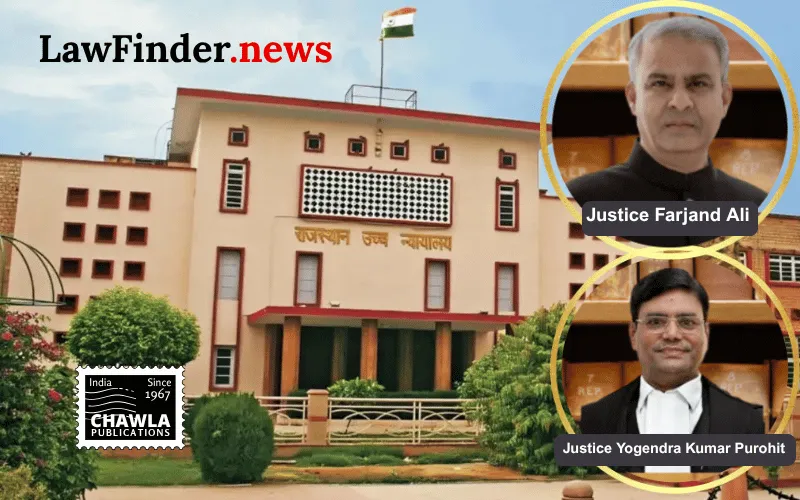
In a significant ruling, the Rajasthan High Court has dismissed criminal contempt proceedings against several police officials, including Additional Superintendent of Police, Dilip Kumar Saini. The case stemmed from statements made by the officials during an inquiry regarding grievances related to the behavior of a judicial officer. The court, comprising Justices Mr. Farjand Ali and Yogendra Kumar Purohit, concluded that the statements did not amount to criminal contempt as they did not scandalize the judiciary or interfere with the administration of justice.
The court observed that the statements were made during an official inquiry ordered by the Presiding Officer and were intended to explain the circumstances surrounding the investigation. The court emphasized that expressing grievances about individual conduct in good faith does not attract criminal contempt unless it undermines the authority of the court itself. The judgment underscored the distinction between criticism of judicial conduct and acts that scandalize or obstruct the judiciary.
The court further noted that the statements were not made publicly and were part of an official investigation process, thereby falling within the protective ambit of Section 6 of the Contempt of Courts Act, 1971. The court reiterated the principles of freedom of speech and the importance of allowing bona fide grievances against judicial officers to be raised through proper channels.
Ultimately, the court held that the statements did not meet the statutory requirements of criminal contempt under Section 2(c) of the Act of 1971, and therefore, the contempt reference was dismissed. This ruling reaffirms the legal standards for criminal contempt and the protection of free speech within the judicial framework.
Bottom Line:
Statements made by police officials during an inquiry, regarding grievances about the conduct of a judicial officer, cannot automatically constitute criminal contempt unless they scandalize the institution of the judiciary or interfere with the administration of justice.
Statutory provision(s): Contempt of Courts Act, 1971 Sections 2(c), 6, 12; Indian Penal Code, 1860 Section 166A
In Re, Bhilwara (Raj.) v. Dilip Kumar Saini, (Rajasthan)(DB) : Law Finder Doc id # 2872573