Court Affirms Availability of Alternative Remedy Under Section 17 of SARFAESI Act for Aggrieved Persons
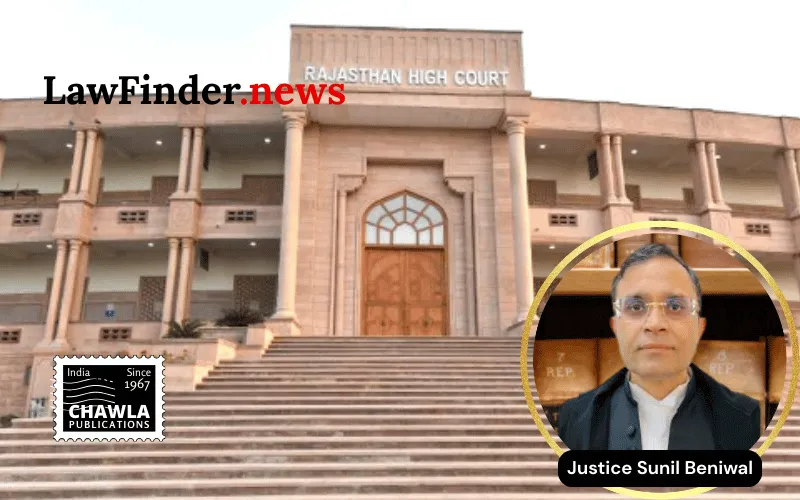
In a significant judgment dated January 22, 2026, the Rajasthan High Court, presided over by Justice Sunil Beniwal, dismissed a writ petition filed by Rajeev Bhandari challenging a notice issued under Section 13(4) of the Securitisation and Reconstruction of Financial Assets and Enforcement of Security Interest Act, 2002 (SARFAESI Act). The petitioner contended that the notice, which affected his property, was illegal as he was neither a borrower nor a guarantor. The court, however, ruled that the writ petition was not maintainable due to the availability of an alternative remedy under Section 17 of the SARFAESI Act before the Debt Recovery Tribunal (DRT).
The case revolved around a flat purchased by Mr. Bhandari in Jodhpur, which was classified as a secured asset in the impugned notice. Despite not being a borrower or guarantor, the petitioner sought quashment of the proceedings initiated by the Jodhpur Development Authority and requested that recovery be made from the original borrower instead.
Mr. Bhandari's legal representatives argued that the notice was issued without following the procedure prescribed under Sections 13(2) and 13(3) of the SARFAESI Act. They further asserted that the writ jurisdiction of the High Court was invoked due to the absence of an efficacious remedy for non-borrowers and guarantors under Section 17 of the Act.
In its judgment, the High Court emphasized that the SARFAESI Act provides an expeditious and effective remedy under Section 17 for any person, including borrowers, guarantors, or individuals affected by measures taken under Section 13(4). The court cited precedents, including the Supreme Court's ruling in United Bank of India v. Satyawati Tondon, which clarified that the term "any person" encompasses individuals affected by actions taken under the Act.
Justice Beniwal noted that the private financial institution involved in the case was not amenable to writ jurisdiction, as it did not qualify as "State" under Article 12 of the Constitution of India. The judgment referenced the Supreme Court's stance in Phoenix ARC Private Limited v. Vishwa Bharati Vidya Mandir, which underscored that writ petitions against private financial entities under Article 226 are not maintainable when statutory remedies are available.
The court further reiterated the need for High Courts to exercise caution and circumspection in entertaining writ petitions when statutory remedies exist. It pointed to the Supreme Court's admonition in PHR Invent Educational Society v. UCO Bank, urging High Courts to respect the statutory framework and refrain from intervening in matters where alternative remedies are adequate.
In conclusion, the Rajasthan High Court dismissed the writ petition as not maintainable, directing the petitioner to seek recourse through the appropriate legal channels, specifically the DRT, as prescribed by the SARFAESI Act.
Bottom Line:
Writ petition challenging notice under Section 13(4) of SARFAESI Act, 2002 cannot be entertained when alternative and efficacious remedy is available under Section 17 of the Act before the Debt Recovery Tribunal.
Statutory provision(s): Section 13(4) of SARFAESI Act, 2002; Section 17 of SARFAESI Act, 2002; Article 226 of the Constitution of India
Rajeev Bhandari v. Jodhpur Development Authority, (Rajasthan) : Law Finder Doc id # 2849452