Contradictions in evidence and unclear medical reports prompt the court to grant bail and emphasize the need for standardized medico-legal practices.
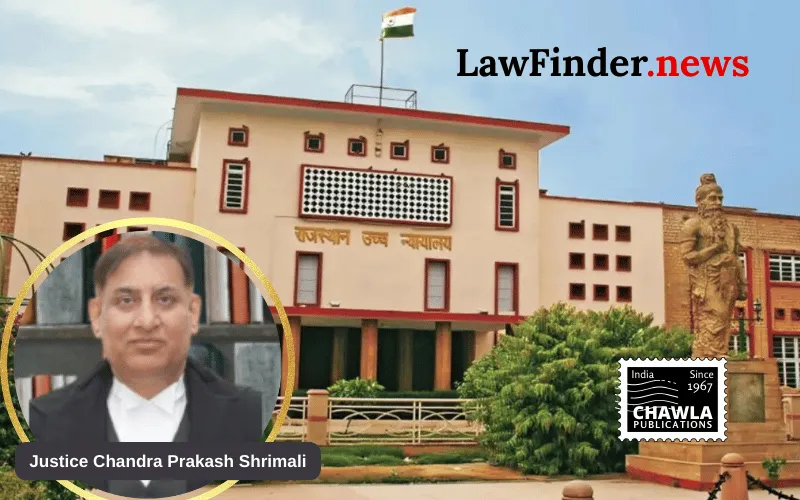
In a significant ruling, the Rajasthan High Court, Jaipur Bench, presided by Justice Chandra Prakash Shrimali, allowed the bail application of Gautam, who was accused of causing grievous injury with an alleged intention to kill. The case, registered under FIR No. 102/2025 at Police Station Mahaveerji, District Karauli, involved charges under the Bharatiya Nyaya Sanhita, 2023. The court's decision highlighted the contradictions in evidence regarding the weapon used and the ambiguity in the medical reports that played a crucial role in the granting of bail.
The court observed that while the FIR claimed the use of a spade to inflict injury on Amar Singh, subsequent statements and investigations revealed the weapon used was actually a stick. Additionally, the medical report provided was deemed vague, as it lacked specific details about the injuries and used conditional language regarding the potential for fatality, which contradicted established medico-legal principles.
Justice Shrimali noted that Gautam had been in custody for over four months, the charge sheet had been filed, and the trial would take time. Furthermore, the co-accused had already been granted bail, and there was no indication that Gautam would abscond or threaten witnesses. Considering these factors, the court deemed it appropriate to release Gautam on bail.
Beyond the immediate case, the judgment had broader implications for the state's medico-legal practices. The court expressed concern over the lack of uniform guidelines for medico-legal reporting in Rajasthan, which often results in vague or speculative medical opinions that can compromise justice delivery. To address this, the court issued directions to the state government to formulate and implement comprehensive medico-legal guidelines to ensure clarity and accountability in medical reports used in criminal cases.
The court's directive aims to standardize the preparation of medical reports with mandatory details such as injury type, dimensions, weapon used, and the implications on the victim’s health. This move is intended to enhance the reliability of medical evidence and uphold the constitutional rights to a fair trial and equality before the law, as enshrined in Articles 21 and 14 of the Indian Constitution.
The decision underscores the critical role of detailed and accurate medico-legal evidence in the administration of justice and sets a precedent for improving the quality of such evidence in Rajasthan.
Bottom Line:
Bail application under Section 483 of the Bharatiya Nagarik Suraksha Sanhita, 2023 allowed due to ambiguous medical report, contradiction in evidence, and absence of likelihood of absconding or threatening witnesses. Directions issued for uniform medico-legal guidelines in Rajasthan.
Statutory provision(s): Bharatiya Nagarik Suraksha Sanhita, 2023, Section 483; Bharatiya Nyaya Sanhita, Sections 115(2), 126(2), 352, 109(1), 3(5), 332(b); Constitution of India, Articles 21, 14.
Gautam v. State of Rajasthan, (Rajasthan)(Jaipur Bench) : Law Finder Doc id # 2863713