Court Upholds Minor's Right to Privacy Under Article 21; Directs Meta Platforms to Ensure Compliance with IT Rules, 2021
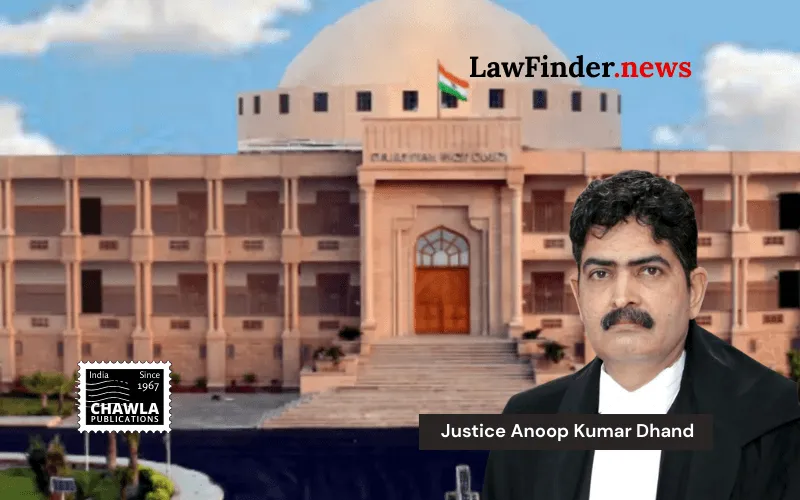
In a significant ruling, the Rajasthan High Court's Jaipur Bench, presided over by Justice Anoop Kumar Dhand, has directed Meta Platforms Inc., the parent company of Facebook, to remove a misleading post claiming that a minor girl, Aaradhya Verma, was missing. The judgment, dated March 5, 2026, comes as a strong assertion of the fundamental rights enshrined under Article 21 of the Indian Constitution, which guarantees the right to life and personal liberty, including the right to privacy and dignity.
The case arose when Aaradhya Verma, represented by her natural guardian-mother, approached the court seeking protection against a Facebook post made under the name of her grandfather. The post falsely claimed that Aaradhya was missing from Ahmedabad and offered a reward of ?1,00,000 for information leading to her whereabouts. This led to a stream of unwanted visitors to her residence in Jaipur, causing distress and invasion of privacy.
The petitioner's counsel argued that the misleading post violated Aaradhya's personal rights and reputation, invoking Article 21. The court recognized the urgency of the matter, noting that no Missing Person Report had been filed and that Aaradhya was residing with her mother. The court emphasized that such misleading information on social media platforms constitutes a breach of fundamental rights, warranting judicial intervention.
The defense, representing Aaradhya's grandparents, denied responsibility for the post and highlighted the grandfather's advanced age and the grandmother's demise. Despite these contentions, the court prioritized the petitioner's immediate safety and privacy, directing Meta Platforms to block or take down the contentious post.
Justice Dhand underscored the necessity for social media regulation, balancing freedom of expression with the protection of vulnerable individuals' rights. The judgment referenced the Information Technology Act, 2000, and the Information Technology (Intermediary Guidelines and Digital Media Ethics Code) Rules, 2021. Rule 3 mandates intermediaries to prevent the dissemination of false, defamatory, or privacy-invading content, a compliance Facebook allegedly overlooked.
In its verdict, the court ordered that the post be removed and instructed that a copy of the ruling be sent to Meta Platforms' registered office in India. This decision reinforces the accountability of social media companies in adhering to Indian regulations and safeguarding individual rights against digital harassment.
The ruling is expected to have significant implications for social media governance, urging platforms to fortify their content management practices in alignment with legal and ethical standards.
Bottom Line:
Protection under Article 21 of the Constitution - Posting misleading information on social media regarding a minor, violating her personal rights, dignity, and reputation, amounts to breach of her fundamental rights.
Statutory provision(s):
Article 21 of the Constitution of India, Information Technology Act, 2000 Section 87, Information Technology (Intermediary Guidelines and Digital Media Ethics Code) Rules, 2021 Rule 3
Aaradhya Verma v. State of Rajasthan, (Rajasthan)(Jaipur Bench) : Law Finder Doc id # 2863297