Court Directs Compliance with Tribunal's Order, Grants Full Benefits with Interest to Petitioner
In a significant ruling, the Rajasthan High Court has mandated the reinstatement of Shyam Sundar Vaishnav, a former bus conductor with the Rajasthan State Road Transport Corporation Ltd. (RSRTC), after a protracted legal battle over wrongful termination. The court criticized the RSRTC for failing to comply with a binding order from the Industrial Tribunal, which had previously directed the reinstatement of Vaishnav with all consequential benefits.
The case dates back to 1990 when Vaishnav was accused of not issuing tickets to 28 passengers during an inspection. He maintained that the charges were fabricated due to personal animosity and his refusal to succumb to unlawful demands by the inspecting officers. Despite a detailed defense, the RSRTC proceeded with disciplinary actions, culminating in Vaishnav's removal from service in 1992.
The Industrial Tribunal, upon examining the case, found the charges unsubstantiated and the inquiry process flawed, and ordered Vaishnav's reinstatement in 2019. However, the RSRTC did not act on this order, prompting Vaishnav to file a writ petition in the High Court for enforcement.
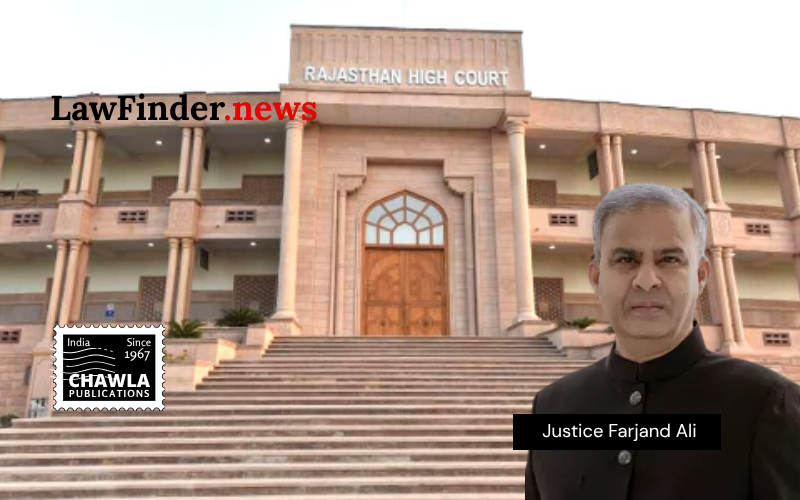
In its judgment, the High Court underscored the binding nature of quasi-judicial orders and rebuked the RSRTC for its disregard of the Tribunal's decision. Justice Farjand Ali emphasized that the RSRTC's failure to appeal or challenge the Tribunal's order rendered it final and obligatory. The court directed the RSRTC to reinstate Vaishnav with all due benefits, including salary, allowances, and retirement benefits, along with 6% per annum interest, within 60 days.
The ruling reinforces the principle that judicial orders must be respected and promptly enforced, upholding the sanctity of the rule of law and ensuring justice for individuals wronged by administrative inaction.
Bottom Line:
Non-compliance with a quasi-judicial Tribunal's binding order, without invoking any statutory remedy, reflects a disregard for the rule of law and judicial propriety. The High Court may direct enforcement of such orders to uphold judicial sanctity and ensure justice.
Statutory provision(s): Industrial Disputes Act, 1947 Section 33(2)(b), Article 227 of the Indian Constitution