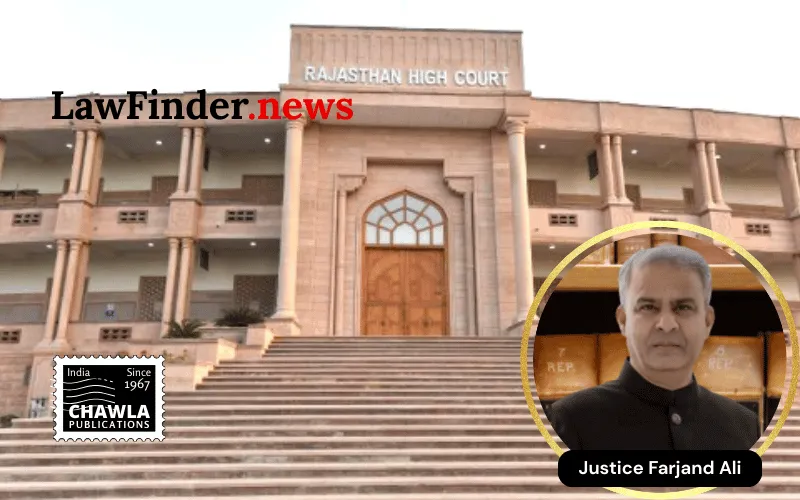
Landmark Judgment Prohibits Public Humiliation of Accused Persons, Enforces Constitutional Rights
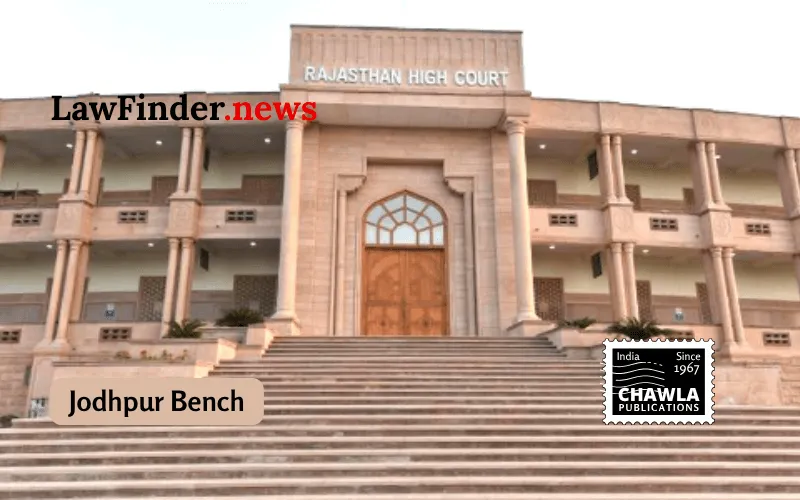
In a significant ruling, the Rajasthan High Court has issued directives to curb the police practice of publicly parading accused individuals, thereby reinforcing the fundamental rights enshrined in the Constitution of India. The judgment, delivered by Justice Mr. Farjand Ali, addresses the grave grievance brought forth by petitioners Islam Khan and others against the State of Rajasthan and its police authorities. The petitioners contended that police actions, which included publicly disseminating photographs and videos of accused individuals on social media, amounted to public humiliation and a violation of their fundamental rights.
The court unequivocally held that such police practices are unconstitutional, arbitrary, and amount to an unwarranted assumption of judicial functions. It emphasized that the presumption of innocence must remain intact until proven guilty, and any act that publicly parades an accused as a culprit prior to adjudication strikes at the root of constitutional morality and the rule of law.
Justice Ali underscored the importance of constitutional morality and the limits of state power, asserting that every organ of the State must act within the confines of its lawful authority, with due regard to the rights and dignity of individuals. The judgment mandates strict adherence to Standard Operating Procedures (SOPs) to ensure humane treatment of accused persons, prohibit public humiliation, and maintain institutional accountability.
The court further directed that no individual possessing an unblemished record and lacking serious criminal antecedents shall be subjected to public parading, disrobing, or any form of degrading treatment. It declared that any act of social media condemnation orchestrated by police authorities, resulting in public humiliation, shall be construed as a form of punishment not sanctioned by law.
This landmark judgment serves as a reminder of the constitutional guarantees of fairness, dignity, and due process, reinforcing the principle that justice must be dispensed within the confines of law, free from sensationalism and public condemnation.
Bottom line:-
Police authorities cannot publicly parade accused persons, disseminate their photographs or videos on social media, or subject them to humiliation and social trial, as such acts violate fundamental rights under Articles 14, 21, and 22 of the Constitution of India.
Statutory provision(s): Articles 14, 21, and 22 of the Constitution of India, Sections 170 and 126 of the Bharatiya Nagarik Suraksha Sanhita, 2023, Section 53 of Indian Penal Code, 1860
Islam Khan v. State Of Rajasthan, (Rajasthan) : Law Finder Doc id # 2893711