Reviewing Authority's Reliance on Preliminary Enquiry and Ignoring Key Evidence Criticized
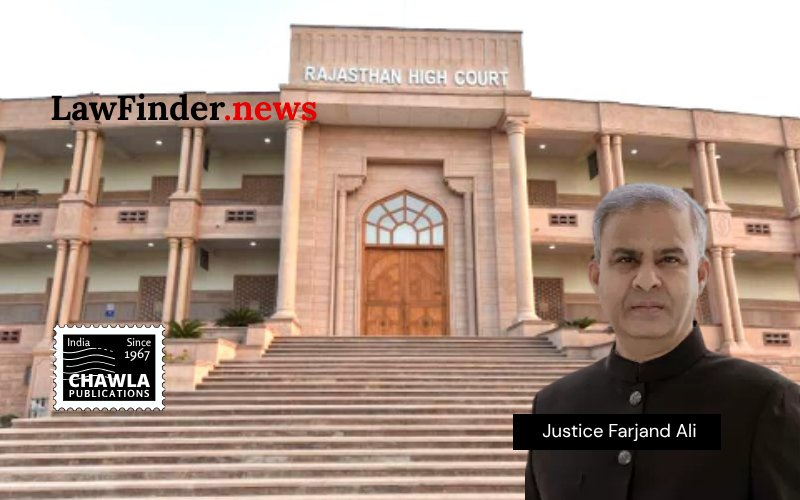
In a significant judgment, the Rajasthan High Court has quashed the dismissal of Shankar Ram, a constable from the Rajasthan Police, who was terminated from his service following allegations of misconduct. The court, presided by Justice Farjand Ali, found the decision to dismiss Shankar Ram flawed due to reliance on a preliminary enquiry report and ignoring crucial evidence that emerged during the regular departmental enquiry.
The petitioner's dismissal stemmed from allegations dating back to his training period in 2009-2010. He was accused of extracting money from a canteen contractor's son under the pretext of securing a police job. Despite a departmental enquiry finding him guilty, subsequent criminal investigations concluded the matter as a civil loan dispute, leading to a Final Report being accepted by the Judicial Magistrate.
The court criticized the Reviewing Authority's approach, highlighting that the final dismissal order disregarded the fact that key witnesses had turned hostile and refuted the allegations during the formal enquiry. The court emphasized that regular enquiry evidence should be the primary basis for decisions, rather than preliminary reports.
Justice Ali's judgment underscored the importance of fairness and adherence to natural justice principles in departmental proceedings. He noted that the penalty of dismissal was disproportionate, especially when the criminal investigation had exonerated Shankar Ram of any criminal intent. The court ordered his reinstatement, directing the Inspector General of Police to conduct a fresh review within three months, strictly based on the regular enquiry's material and the criminal investigation's findings.
The judgment reaffirms the limited scope of judicial review in disciplinary matters, focusing on legality, procedural correctness, and proportionality of punishment. The court's decision mandates the Reviewing Authority to ensure any future actions are judicious and not arbitrary, respecting the principles of natural justice.
Bottom Line:
Departmental Enquiry - Reviewing Authority cannot solely rely on the Preliminary Enquiry Report; regular enquiry evidence must be considered. Exercise of suo motu review powers must be judicious and not arbitrary. Hostile witness testimony and findings of a criminal investigation must be duly considered.
Statutory provision(s): Article 226 of the Constitution of India, Rule 32 of the Rajasthan Civil Services (Classification, Control and Appeal) Rules
Shankar Ram v. State of Rajasthan, (Rajasthan) : Law Finder Doc Id # 2818984