Court emphasizes realistic approach in maintenance cases, modifies retrospective liability for husband
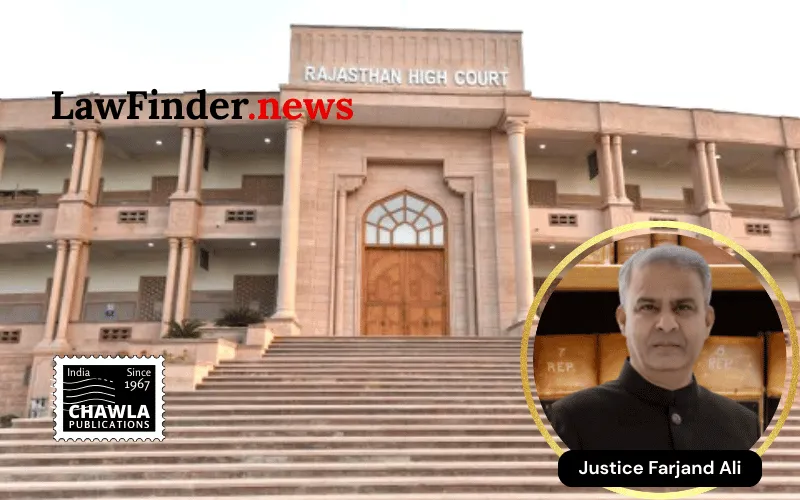
In a significant ruling, the Rajasthan High Court, presided over by Justice Farjand Ali, delivered a judgment on May 12, 2026, concerning a contentious maintenance dispute between Rakesh Sharma and his estranged wife, Manju Devi. The case, which has drawn attention for its implications on maintenance jurisprudence, was initiated under the Protection of Women from Domestic Violence Act, 2005.
The petitioner, Rakesh Sharma, challenged the orders of the Additional Chief Judicial Magistrate (ACJM) No.4, Bikaner, and the Additional District Judge (ADJ) No.2, Bikaner, which directed him to pay substantial maintenance and compensation to his wife, Manju Devi. The trial court had initially ordered Sharma to pay Rs. 20,000 per month as maintenance and Rs. 5,000 for accommodation, along with a one-time compensation of Rs. 2 lakhs. The appellate court modified the maintenance to Rs. 10,000 per month, applied retrospectively from the date of application in 2014, until Sharma's government service appointment in 2018.
Justice Ali, in his detailed judgment, highlighted the essence of maintenance jurisprudence, stressing that its primary objective is to prevent destitution and ensure the basic dignity of the claimant spouse. He noted that maintenance should not be punitive or serve as a financial windfall for the claimant but should strike a balance between the claimant's needs and the payer's capacity.
The court observed that the retrospective liability imposed by the lower courts could lead to financial ruin for Sharma, a salaried employee, who was suddenly burdened with a decade's worth of accumulated arrears. Justice Ali emphasized that maintenance should commence from the date of the court order to avoid oppressive financial obligations.
Additionally, the court set aside the compensation for alleged harassment, as the related criminal proceedings are still pending. The judgment underscores the remedial and protective nature of the DV Act, advising courts to avoid findings on disputed allegations pending criminal adjudication.
The court's decision to modify the maintenance order reflects a pragmatic approach, ensuring immediate financial support to the claimant while preserving the payer's financial stability. This judgment is expected to influence future maintenance cases, emphasizing timely adjudication and equitable relief.
Bottom line:-
Maintenance jurisprudence - Maintenance is not punitive but aims to prevent destitution and starvation, ensuring basic dignity and survival for the claimant spouse. Courts should adopt a realistic and equitable approach when adjudicating maintenance, avoiding oppressive retrospective liabilities.
Statutory provision(s): Protection of Women From Domestic Violence Act, 2005 Sections 12, 29; Bharatiya Nagarik Suraksha Sanhita, 2023 Sections 438, 442
Rakesh Sharma v. Manju Devi, (Rajasthan) : Law Finder Doc id # 2903709