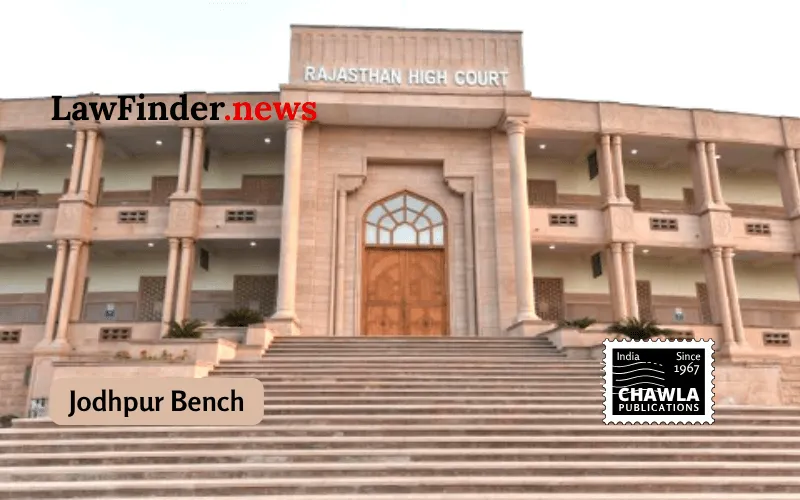
Court Directs State to Implement Comprehensive Water Conservation Measures Amid Alarming Water Scarcity
In a significant move, the Rajasthan High Court has taken suo motu cognizance of the acute water crisis affecting Jodhpur City, also known as the "Blue City," and the deteriorating conditions of its ancient water sources. The Division Bench comprising Dr. Pushpendra Singh Bhati and Dr. Nupur Bhati has directed the state and local authorities to take immediate and comprehensive actions to address the severe water scarcity and revive the traditional water systems.
The court's intervention comes in response to alarming reports highlighting the depletion, pollution, and neglect of Jodhpur's water bodies, as well as the ineffective implementation of statutory provisions on rainwater harvesting and groundwater recharge. Newspaper accounts between May 15 and May 20, 2026, have painted a dire picture of the city's water situation, with reservoirs drying up and the populace increasingly reliant on emergency measures such as tanker supply.
Recognizing the right to clean and safe drinking water as an integral part of the right to life under Article 21 of the Indian Constitution, the court emphasized the state's constitutional duties under Articles 47, 48A, and 51A(g) to safeguard public health and the environment. It underscored the importance of preserving traditional water bodies, applying the Public Trust Doctrine, which mandates that water resources be maintained for the public good and future generations.
The court has issued a series of directives to ensure the preservation and scientific management of water resources. Key among these is the constitution of a High-Level Expert Committee tasked with developing a "Master Water Security, Restoration and Conservation Plan." This plan is to include measures for the restoration of traditional water bodies, groundwater recharge, rainwater harvesting, and the scientific maintenance of water infrastructures.
Interim measures include preventing the discharge of sewage into water bodies, regular maintenance of traditional water structures, and strict enforcement against illegal water extraction and black-marketing. The court has also called for a detailed assessment of the current water storage status in reservoirs and the functionality of rainwater harvesting systems in the city.
The court has set the next hearing for May 22, 2026, and appointed Mr. Abhishek Mehta and Ms. Aditi Moad as Amicus Curiae to assist in the proceedings. The respondents, including senior government officials and local authorities, are required to submit detailed affidavits on the steps taken and future plans to address the crisis.
The High Court's proactive stance highlights the urgent need for sustainable water management and the revival of traditional water systems that have historically supported Jodhpur, particularly in its arid climate. The decision is a crucial step towards ensuring water security and environmental sustainability for the city's nearly 20 lakh residents.
Bottom line:-
Right to clean and safe drinking water is an integral part of the fundamental right to life under Article 21 of the Constitution of India. The State is constitutionally obligated to protect and rejuvenate water bodies, ensure sustainable water management, and enforce rainwater harvesting and groundwater recharge mechanisms.
Statutory provision(s): Article 21, Article 47, Article 48A, Article 51A(g) of the Constitution of India, Section 238(1) of the Rajasthan Municipalities Act, 2009