Court dismisses wife's appeal challenging the applicability of the Hindu Marriage Act to Meena community, citing lack of specific customs contrary to the Act.
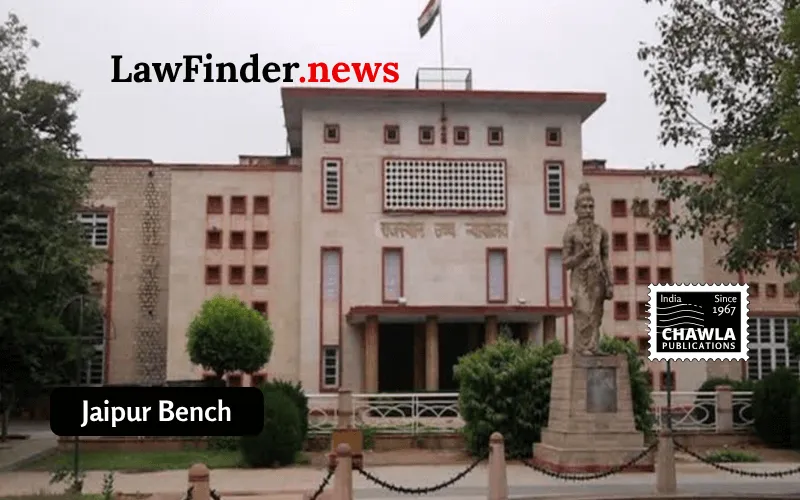
In a significant ruling, the Rajasthan High Court, Jaipur Bench, has upheld the applicability of the Hindu Marriage Act, 1955, to members of Scheduled Tribes, specifically the Meena community, if their marriage is solemnized according to Hindu rites and customs. The decision was rendered in the case of Niharika Meena versus Sanjay Dutt Meena, where the appellant-wife challenged the applicability of the Act to their divorce proceedings.
The Division Bench, comprising Justice Sudesh Bansal and Justice Anil Kumar Upman, dismissed the appeal filed by Niharika Meena under Section 19 of the Family Courts Act, 1984, challenging the order of Family Court No.3, Jaipur Metropolitan-I. The Family Court had rejected her application to dismiss the divorce petition filed by her husband on the grounds of cruelty, under Section 13(1)(ia) of the Hindu Marriage Act.
The appellant contended that as members of the Meena community, a Scheduled Tribe, the provisions of the Hindu Marriage Act were not applicable to them, citing Section 2(2) of the Act. However, the court noted that the marriage was solemnized as per Hindu rites and customs, and no specific customs contrary to the Act were proved by the wife. Furthermore, the court observed that the wife herself had previously invoked Section 9 of the Hindu Marriage Act for restitution of conjugal rights, indicating acceptance of the Act's applicability.
The court also addressed the wife's objection regarding the territorial jurisdiction of the Family Court at Cuttack, where the divorce petition was initially filed. This objection was deemed irrelevant as the Supreme Court had transferred the case to the Family Court at Jaipur to consolidate proceedings with the wife's pending petition.
In its judgment, the court emphasized the necessity for clear evidence of any specific customs or usages within the Meena community that would preclude the application of the Hindu Marriage Act. It found the wife's claims to be ambiguous and unsubstantiated, noting the absence of any detailed pleading of distinct customs in her community.
The judgment reinforces the principle that members of Scheduled Tribes can invoke the provisions of the Hindu Marriage Act if their marriage is conducted according to Hindu customs and no conflicting customs are demonstrated. This decision is likely to have broader implications for similar cases involving Scheduled Tribes across India.
Bottom Line:
Hindu Marriage Act, 1955 - Scheduled Tribes - Applicability of Act - Members of Scheduled Tribes can invoke provisions of the Hindu Marriage Act if their marriage is solemnized as per Hindu rites and customs and no prevailing customs contrary to the Hindu Marriage Act are pleaded or proved.
Statutory provision(s): Hindu Marriage Act, 1955 Sections 13(1)(ia), 2(2); Family Courts Act, 1984 Section 19; Order 7, Rule 11 CPC; Section 151 CPC.
Niharika Meena v. Sanjay Dutt Meena, (Rajasthan)(Jaipur Bench)(DB) : Law Finder Doc id # 2874262