Reserved category candidates from other states cannot claim reservation benefits in Rajasthan; court dismisses petition challenging domicile-based restrictions.
In a significant decision, the Rajasthan High Court has dismissed a petition challenging the state's reservation policy for NEET PG admissions, affirming the state-specific nature of reservation benefits. The court ruled that reservation policies are inherently state-specific, and therefore, reserved category candidates from other states cannot claim the benefits of relaxed qualifying standards in the state of Rajasthan.
The petition, filed by the Federation of Private Medical and Dental College of Rajasthan, contested the decision made by the NEET PG Medical and Dental Admission/Counselling Board. The contention was that candidates from reserved categories in other states were being treated as unreserved candidates in Rajasthan, thereby being denied the benefit of the lowered qualifying percentiles set by the Central Government.
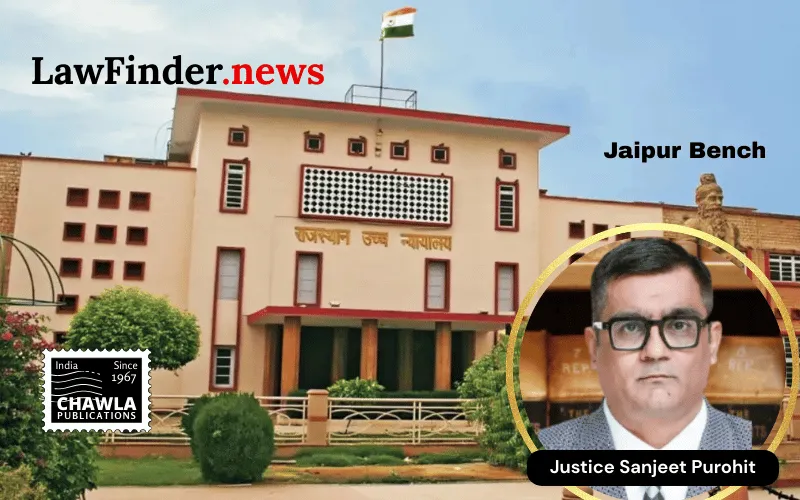
Justice Sanjeet Purohit of the Rajasthan High Court emphasized the constitutional provisions that define Scheduled Castes and Tribes in relation to specific states, as outlined in Articles 341, 342, and 342A of the Constitution of India. The court noted that the reservation benefits are confined to candidates belonging to categories notified within a particular state, based on the socio-economic and cultural realities of that state.
The court further clarified that while candidates from other states can compete for unreserved seats in Rajasthan, they cannot claim the benefits of relaxed qualifying criteria meant for the state's reserved category candidates. The court observed that the reservation policy outlined in the Instruction Booklet was consistently applied throughout the counselling process and was not challenged at earlier stages by the petitioner.
The judgment also addressed the argument that the reservation policy amounted to 100% domicile-based reservation. The court rejected this claim, stating that the policy does not create an absolute bar but merely restricts the benefits of reservation to candidates domiciled in Rajasthan.
This decision aligns with previous Supreme Court judgments, such as Marri Chandra Shekhar Rao v. Seth G.S. Medical College and Bir Singh v. Delhi Jal Board, which have upheld the state-specific nature of reservation benefits and the constitutional framework governing the same.
The court concluded that the impugned decision did not suffer from any illegality or arbitrariness, and dismissed the petition, emphasizing the importance of maintaining merit standards in postgraduate medical admissions.
Bottom Line:
Benefits of reservation in one State cannot be extended to reserved category candidates belonging to another State, as reservation policies are State-specific and cannot override constitutional and statutory frameworks.
Statutory provision(s): Articles 15(5), 14, 341, 342, 342A of the Constitution of India