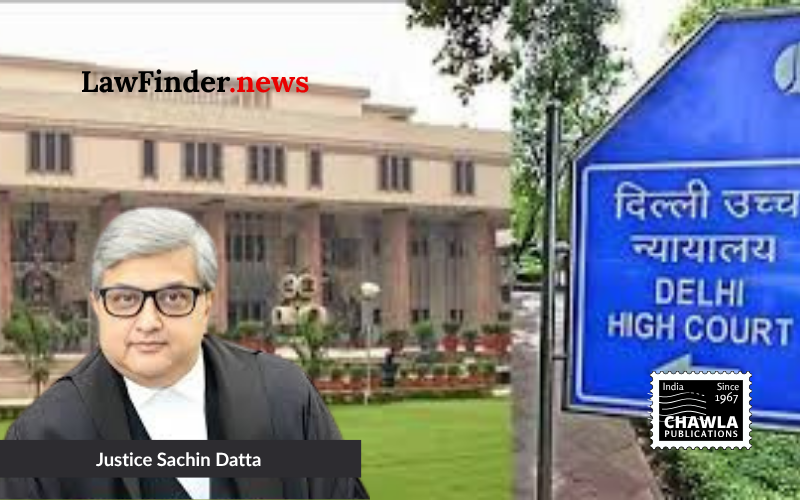
Delhi High Court Orders Refund of Stamp Duty in Fraudulent Land Sale Case Court Condones Delay in Filing Refund Application, Citing Fraud as Grounds for Exception
In a landmark judgment dated November 14, 2025, the Delhi High Court has directed the Collector of Stamps to refund the stamp duty and registration fees paid by Frill Infra Developers Private Limited for a fraudulent land transaction. The court, presided by Mr. Sachin Datta, J., ruled that the statutory limitation period for claiming refunds can be waived in cases of fraud, emphasizing that the right to refund is not extinguished by the mere expiry of limitation.
Frill Infra Developers, represented by Mr. Varun Garg, had paid a substantial amount for the purchase of e-Stamp Paper and registration fees in a transaction involving agricultural land in Village Alipur, Delhi. The transaction turned out to be fraudulent, with the purported sale deed never being registered and the supposed seller not being the genuine owner of the land. Despite discovering the fraud in December 2017, the petitioners faced hurdles in securing a refund due to the lapse of the statutory limitation period.
In its defense, the Collector of Stamps argued that the claim was barred by limitation under the Indian Stamp Act, 1899, insisting that applications for refund must be filed within six months from the execution of the instrument. However, the petitioner countered, citing the inability to surrender the original E-Stamp Certificate, which was seized in a criminal investigation.
Judge Datta, referring to previous judgments from the Supreme Court and other High Courts, underscored that the Indian Stamp Act does not prohibit refunds beyond the statutory period in cases of fraud. The court noted that the legal right for obtaining a refund is not obliterated even where the statutory mechanism is framed in narrow terms. The judgment highlighted that retention of the stamp duty by the state in fraudulent cases would be contrary to Articles 265 and 300A of the Constitution of India, which prevent the state from retaining amounts it is not entitled to collect.
The court's decision draws on precedents such as the Supreme Court ruling in Bano Saiyed Parwaz v. Chief Controlling Revenue Authority, where it was determined that the expiry of the limitation period may bar the remedy but not the right to claim a refund. This judgment reaffirms the principle that, when dealing with citizens, the state should not rely on technicalities, especially in cases where fraud has been established.
With this ruling, the Delhi High Court has set a significant precedent, potentially influencing future cases involving fraud and the condonation of delays in refund applications. The judgment not only provides relief to Frill Infra Developers but also reinforces the judiciary's commitment to ensuring justice is served, irrespective of procedural technicalities.
Bottom Line:
Refund of stamp duty and registration fees can be granted in cases of fraud even if the statutory limitation period for claiming such refund has lapsed, as the right to refund is not extinguished by mere expiry of limitation.
Statutory provision(s): Indian Stamp Act, 1899 Section 50(3), Indian Stamp Act, 1899 Sections 49 and 50, Constitution of India, 1950 Article 226, Limitation Act, 1963 Section 5, Constitution of India, 1950 Articles 265 and 300A.
Frill Infra Developers Private Limited v. Collector of Stamps, (Delhi) : Law Finder Doc Id # 2808526