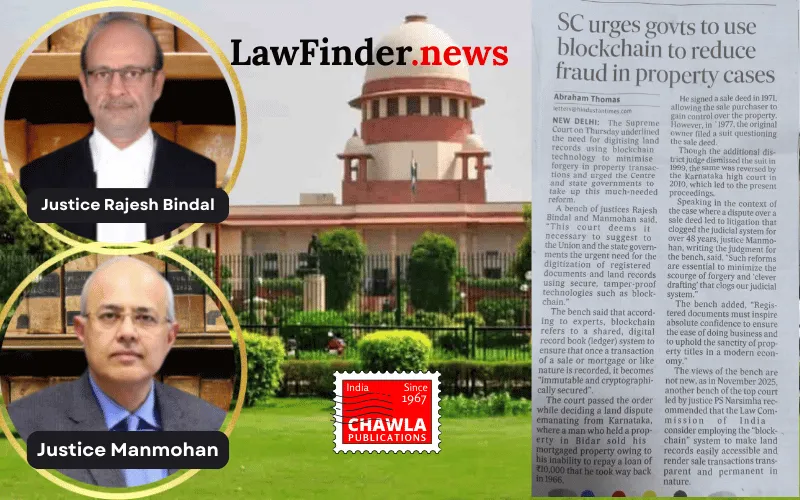
Supreme Court Upholds Validity of Registered Sale Deed in Hemalatha vs Tukaram Case The Apex Court reaffirms the sanctity of registered documents, dismissing allegations of sham transactions in property dealings.
In a landmark ruling, the Supreme Court of India has set aside the judgment of the Karnataka High Court in the case of Hemalatha (D) By Lrs. vs Tukaram (D) By Lrs., thus upholding the validity of a registered sale deed that was contested as being a sham transaction. The case, which revolved around the ownership of a house in M. Bidar, highlighted the critical importance of registered documents in property transactions.
The case originated from a dispute over a sale deed and a rental agreement dated November 12, 1971. The Respondent, Tukaram, had alleged that these documents were nominal and not intended to be acted upon, claiming they were executed under misrepresentations and were essentially a mortgage arrangement disguised as a sale.
The trial court had initially ruled in favor of Tukaram, declaring the documents as nominal and sham. However, the Additional District Judge, Bidar, reversed this decision, emphasizing the strong presumption of validity attached to registered documents under the Indian Evidence Act, 1872. The High Court later reinstated the trial court's judgment, prompting the appellants to approach the Supreme Court.
In its analysis, the Supreme Court underscored that registered sale deeds carry a strong presumption of validity and genuineness. It stressed that such documents should not be lightly declared as sham unless cogent evidence is provided to rebut this presumption. The Court reiterated that mere allegations or nebulous assertions are insufficient to displace the legitimacy of a registered deed.
The judgment outlined the rigorous standard required for pleading when challenging the authenticity of a registered document. The Court noted that allegations must be clear, cogent, and convincing, akin to the standard under Order VI Rule 4 of the Civil Procedure Code. It further emphasized that clever drafting aimed at creating an illusion of a cause of action would not suffice.
The Supreme Court criticized the High Court for misinterpreting precedents related to the admissibility of oral evidence in cases involving allegations of sham transactions. It clarified that while oral evidence might be admissible to demonstrate the true nature of a transaction, the initial presumption strongly favors the validity of registered documents.
The Court concluded that the sale deed in question was a bona fide transaction and not a mortgage by conditional sale, as argued by the respondents. It highlighted the absence of any condition in the deed that could indicate a mortgage arrangement. The decision reinstates the judgment of the Additional District Judge, dismissing the respondent's suit and affirming the appellants' ownership of the disputed property.
This ruling serves as a significant precedent in reinforcing the sanctity of registered documents and ensuring the stability of property transactions in India.
Bottom Line:
Registered sale deeds carry a strong presumption of validity and genuineness. They should not be lightly declared as sham documents unless cogent evidence and material particulars are provided to demonstrate the document's invalidity.
Statutory provision(s): Indian Evidence Act, 1872 Sections 91, 92; Transfer of Property Act, 1882 Section 58(c); Civil Procedure Code, 1908, Order VI Rule 4.
Hemalatha (D) By Lrs. v. Tukaram (D) By Lrs., (SC) : Law Finder Doc Id # 2842601