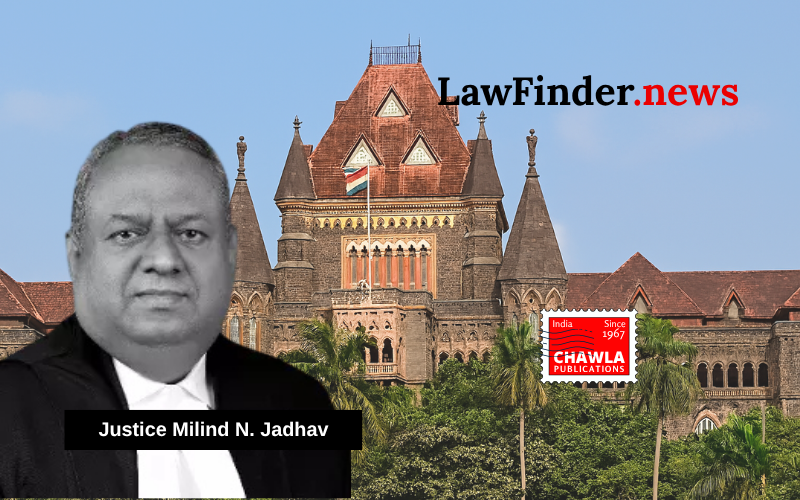
Bombay High Court Upholds Right to Legal Representation in Labour Disputes Court Emphasizes Fairness and Equality in Granting Leave for Legal Representation under Industrial Disputes Act
In a significant ruling, the Bombay High Court has set aside an order by the 7th Labour Court in Bandra, Mumbai, allowing M/s. Bella Vista Drycleaners to be represented by a legal practitioner in ongoing proceedings. The case, which involved a dispute between the small-scale laundry business and its former employee Vishwanath Kanojia, revolved around the interpretation of Section 36 of the Industrial Disputes Act, 1947.
Presided over by Justice Milind N. Jadhav, the court held that denying legal representation to parties not versed in law violated the principles of natural justice and fairness. The court found that the Labour Court had mechanically rejected Bella Vista's application for legal representation, failing to consider whether such denial would prejudice the employer, who lacked the expertise to effectively navigate the legal proceedings.
The judgment emphasized that Section 36(4) of the Industrial Disputes Act allows for legal representation with the consent of the opposite party and the leave of the court. However, the court clarified that this leave should be granted liberally, particularly when one party demonstrates a genuine inability to represent itself, to ensure fairness and equality in the adjudication process.
Justice Jadhav noted that the Industrial Disputes Act was designed to protect workers in an era when legal resources were scarce for employees. However, the court recognized that the landscape of industrial relations and legal representation has evolved, necessitating a more balanced approach that respects both the legislative intent and the principles of natural justice.
The court's decision drew upon precedents set by the Supreme Court and previous High Court rulings, reinforcing that the right to a fair procedure, enshrined in Articles 14 and 21 of the Constitution of India, includes the right to effective legal representation. The judgment highlighted the necessity of professional legal assistance in complex legal proceedings to prevent inequality and injustice.
Mr. Shailesh S. Pathak, appointed through the Legal Aid Department to assist the court, provided valuable insights into the interpretation of Section 36 and the need for courts to exercise discretion in a manner that advances justice. The judgment acknowledged Mr. Pathak's assistance and directed the Legal Aid Department to compensate him for his services.
The ruling is expected to influence future cases involving representation in labour disputes, providing a framework for courts to ensure that proceedings are conducted fairly, with an emphasis on equal access to legal resources for all parties involved.
Bottom Line:
Industrial Disputes Act - Representation by legal practitioner in Labour Court - Leave of the Court under Section 36(4) must be interpreted liberally and purposively to ensure fairness and equality, especially when a party demonstrates genuine inability to represent itself.
Statutory provision(s): Industrial Disputes Act, 1947 Sections 36(3), 36(4); Constitution of India, 1950 Articles 14, 21.