Supreme Court Quashes SC/ST Act Charges in Sohanvir Case Apex Court rules caste-based abuses must occur in public view; proceedings under IPC to continue.
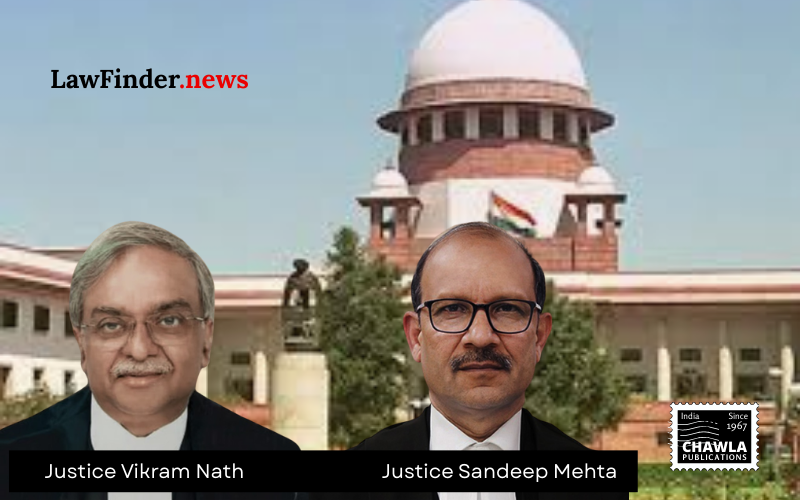
In a significant ruling, the Supreme Court of India has quashed charges against Sohanvir and others under the Scheduled Castes and Scheduled Tribes (Prevention of Atrocities) Act, 1989, specifically under Section 3(1)(s). The judgment, delivered by a bench comprising Justices Vikram Nath and Sandeep Mehta, emphasized the requirement that caste-based abuses must occur "within public view" to qualify under the said provision.
The case originated from an incident dated July 23, 2023, where the complainant, belonging to the Scheduled Castes community, alleged that the appellants, including Sohanvir, hurled caste-based abuses at her. The complainant claimed that the incident took place inside her residence, a fact which became pivotal in the Supreme Court’s decision.
The apex court, referencing its earlier decisions, reiterated that for an offence under Section 3(1)(s) of the SC/ST Act, the abusive act must be performed in a space visible to the public. The court noted that the abuses allegedly occurred within the confines of the complainant's home, thus failing to meet the public view criterion.
This ruling overturned the previous decision by the High Court of Judicature at Allahabad, which had upheld the trial court's order summoning the appellants under the SC/ST Act, along with charges under the Indian Penal Code (IPC).
The Supreme Court clarified that while the SC/ST Act charges are quashed, the trial for offences under Sections 323 and 504 of the IPC will proceed. The decision underscores the necessity for clear statutory compliance in invoking the SC/ST Act's provisions, ensuring that the legal protections are applied correctly and consistently.
The judgment also highlighted the appellate court’s role in exercising caution and ensuring statutory requirements are prima facie satisfied before proceeding with charges, particularly under special legislations like the SC/ST Act.
Bottom Line:
Essential ingredient of the offence under Section 3(1)(s) - Allegations of caste-based abuses must occur "within public view" to attract the provision - Abuses uttered inside the complainant's premises do not satisfy this requirement.
Statutory provision(s): Scheduled Castes and Scheduled Tribes (Prevention of Atrocities) Act, 1989 Section 3(1)(s), Criminal Procedure Code, 1973 Section 156(3), Indian Penal Code Sections 323, 504.
Sohanvir @ Sohanvir Dhama v. State of U.P., (SC) : Law Finder Doc Id # 2819379