New Delhi, May 13 The Supreme Court on Wednesday agreed to hear a plea challenging the Delhi High Court verdict which had said that no law college or university can bar students from appearing in examinations due to a lack of minimum attendance.
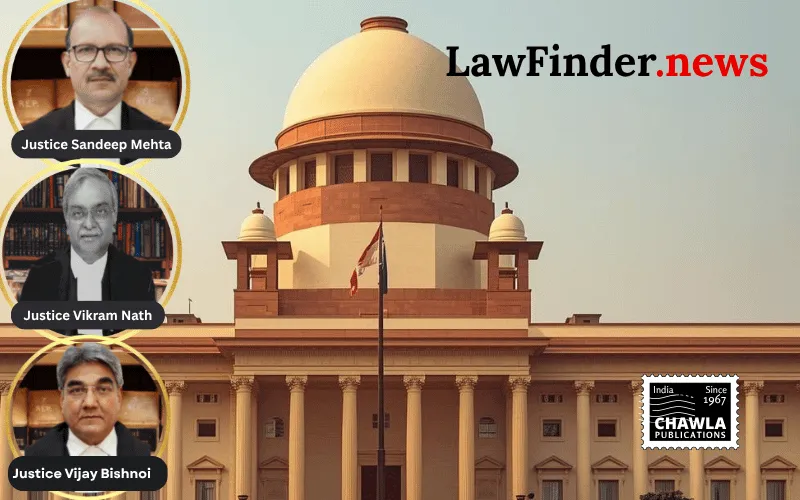
A bench of Justices Vikram Nath, Sandeep Mehta and Vijay Bishnoi observed that if such a position were to be accepted, the hostels of the National Law University and law colleges could become "just boarding and lodging facilities".
The top court, however, refused to stay the high court's November 3 verdict and said it would hear the matter and decide it.
The bench sought responses from the Bar Council of India (BCI) and others on the plea challenging the high court's verdict, which had also asked the BCI to re-evaluate the mandatory attendance norms.
The high court had said it was of the strong view that attendance norms for education in general and legal education in particular cannot be made so stringent that they lead to mental trauma, let alone the death of a student.
It had delivered the judgment while disposing of a suo motu petition, initiated by the Supreme Court and transferred to the high court, in relation to the death of law student Sushant Rohilla by suicide in 2016 after allegedly being barred from sitting for the semester exams due to lack of requisite attendance.
Rohilla, a third-year law student, had hanged himself at his home here on August 10, 2016, after his college allegedly barred him from sitting for the semester exams due to lack of requisite attendance. He left behind a note, saying he was a failure and did not wish to live.
The high court had directed that it would be mandatory for all educational institutions and universities to constitute grievance redressal committees (GRCs) in terms of the University Grants Commission Regulations, 2023.
Observing that GRCs were for safeguarding the interests of students, including their mental health, it had directed the UGC to initiate consultations and consider amending the UGC regulations.
"The BCI shall undertake a re-evaluation of the mandatory attendance norms for the three-year and five-year LLB courses in India...," it had said.
The high court had said the BCI should incorporate the modification of attendance norms to enable giving credit to moot courts, seminars, model parliament, debates and attending court hearings.
It had added that no law college, university or institution should be permitted to mandate attendance norms over and above the minimum percentage prescribed by the BCI under the Legal Education Rules.