New Delhi, Jan 6 The Supreme Court on Tuesday asked the Centre and the Delhi government to consider setting up a special court to conduct a day-to-day trial in a 2021 case probed by the National Investigation Agency related to the ISIS links of a person.
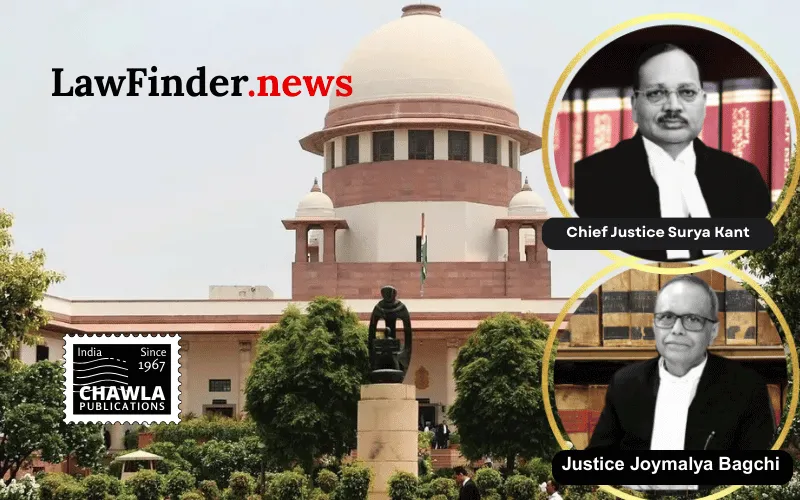
A bench comprising Chief Justice Surya Kant and Justice Joymalya Bagchi was hearing the bail plea of Md Heydaitullah who allegedly used Telegram groups to propagate the ideology of the terrorist group in India and recruit other persons.
The CJI said that inordinate delay in trial gives to legitimate submissions on behalf of the accused that he cannot be kept in custody for a longer period of time, that too without the trial.
The bench asked Additional Solicitor General Aishwarya Bhati, appearing for the government and the NIA, to apprise it within a week about the setting up of the special court here to conduct a day-to-day trial in the case in which 125 witnesses are to be examined.
Earlier, the top court had, in a separate case, pulled up the Centre and Maharashtra government for not creating courts for cases under special statutes and said that courts will be forced to grant bail to the accused due to delay in trial proceedings.
A bench comprising Chief Justice Surya Kant and Justice Joymalya Bagchi had made the observations while hearing the bail plea of alleged Naxal sympathiser Kailash Ramchandani in the case related to the killing of 15 policemen in an IED blast in 2019 at Gadchiroli in Maharashtra.
"If the authority fails to establish courts with requisite infrastructure for conducting speedy trial under the NIA Act and other special statutes, the court would invariably be forced to release the accused on bail, as there is no effective mechanism to conclude the trial in a time-bound manner," Justice Kant had said.
In the ISIS-related case, the Delhi High Court had refused to grant bail to Heydaitullah, an alleged member of the terror outfit, in the case related to radicalisation of youths using cyberspace.
The accused had challenged a trial court order declining any relief on the ground that mere association or support to a terrorist organisation would not constitute an offence under the Unlawful Activities Prevention Act (UAPA).
The high court had rejected the contention, and said Heydaitullah, a qualified MBA graduate working at an IT company in Gurugram, was not a “passive” supporter as material showed that he advocated “Jihad in order to establish Khilafat” even through violent means.
“The Appellant admittedly in 2018 had taken an oath (Bayath) in the name of Abu Bakr al Baghdadi and Abu al-Hasan al-Hashimi al-Qurashi. Abu Bakr al Baghdadi is admittedly a well-known leader of ISIS and as per the chargesheet had declared formation of ‘caliphate’ in June 2014,” the high court had said.
“ISIS had been declared to be a terrorist organisation and judicial notice can be taken of the fact that the world at large knows about the activities of ISIS.. Appellant is an educated person and was well aware of the nature of activities of ISIS,” it added.
Dismissing the plea, the high court said the bar on grant of bail under the UAPA was clearly applicable in the case. Following an FIR registered in 2021, the National Investigation Agency arrested the accused on October 22, 2022.
The prosecution alleged that he disseminated the ISIS ideology through the cyber space and spread hatred against the Government of India by promoting enmity against Hindus on social media.
It was further alleged that he had transferred funds for the cause of ISIS from his bank account and various materials, including the oath of allegiance, methods for preparation of explosive material, etc were recovered from him during the investigation.