New Delhi, Apr 29 In a major relief to a group of daily wage labourers engaged at ISRO-linked Liquid Propulsion Systems Centre, the Supreme Court on Wednesday ordered their regularisation saying that the authorities failed to comply with binding judicial directions to provide them permanent status.
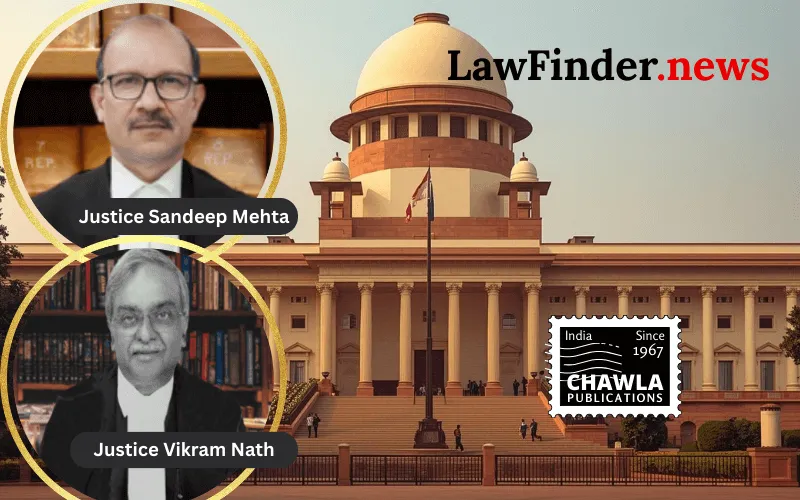
A bench of Justices Vikram Nath and Sandeep Mehta was hearing an application filed by daily wage employees engaged at ISRO-linked LPSC, Mahendragiri, challenging the Madras High Court's judgment which had dismissed the workers' plea against the "Gang Labourers (Employment for Sporadic Types of Work) Scheme, 2012".
In an order, the court said, "The State, as a model employer, cannot afford to treat a segment of its workforce, those who have contributed, however indirectly, to national endeavours of paramount importance, with arbitrariness or indifference."
The application was filed by daily wage employees engaged between 1991 and 1997 for tasks such as loading, unloading and shifting materials at the Mahendragiri unit, seeking regularisation for several years through multiple rounds of litigation.
The top court held that the 2012 scheme, which continued their engagement only on a temporary basis, was contrary to the directions issued earlier by the Central Administrative Tribunal (CAT) and affirmed subsequently by the high court and the Supreme Court.
"The respondents have failed to fully comply with the said directions, which had attained finality," the bench said.
Allowing the appeal, the court directed the authorities to regularise the services of the appellants and grant them permanent status with effect from September 9, 2010, the outer limit earlier fixed for framing the scheme. It asked the respondents to complete the exercise within four weeks.
"Denying them even the basic courtesy of a recognised service status, while reaping the benefits of their labour, strikes at the root of fairness and dignity in public employment," the court said.
The bench further ruled that the benefit of the judgment would also extend to all similarly situated persons engaged under the same scheme.
In strong remarks, the court said the State's obligation to act as a model employer flows from Article 14 of the Constitution and criticised the prolonged litigation faced by workers seeking what was "justly due".
"Before parting with the matter, we must express our serious disapproval of the manner in which the respondents have dealt with the present case. The obligation of the State to act as a model employer is not a mere exhortation but flows directly from the guarantee of equality enshrined in Article 14 of the Constitution," it said.
The bench also underlined the contribution of support staff in India's space programme, observing that scientific achievements were not solely the result of engineers and scientists but also of those performing ancillary tasks essential for operations.
"To disregard or discriminate against such individuals in matters of service recognition would be to undermine the collective ethos that propelled India to the Moon and beyond," the bench said.
R. Iyyappan v. Union of India, (SC) : Law Finder Doc Id # 2890791