New Delhi, Apr 1 The Supreme Court on Wednesday reserved its verdict on a batch of pleas, including review petitions, related to granting of retrospective environmental clearances to projects found violating green norms.
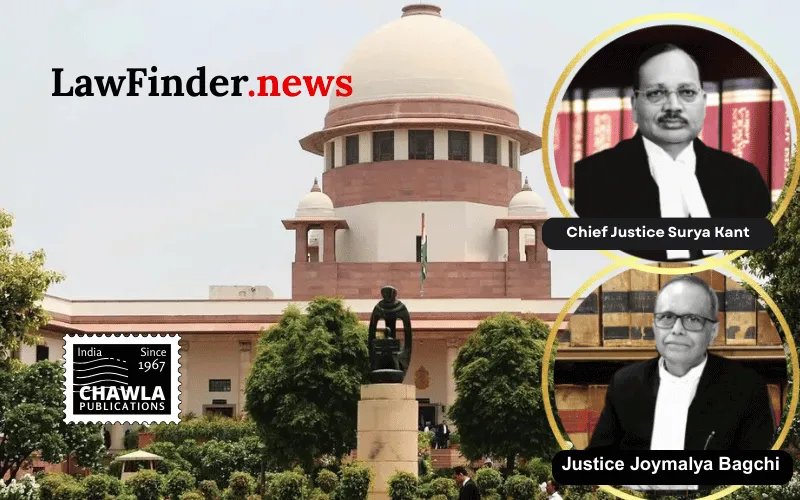
A bench of Chief Justice Surya Kant and Justices Joymalya Bagchi and Vipul M Pancholi reserved the judgment on as many as 49 petitions after hearing the matter for six days.
While reserving the verdict, the CJI asked the parties to submit short written notes on the issue before the bench.
Additional Solicitor General Aishwarya Bhati, representing the Centre, defended the government's office memorandum for granting retrospective environmental clearance, saying it does not grant "blanket" regularisation.
"We do not have any recommendations for diluting the environmental jurisprudence," Bhati said, adding that the government was committed to expanding the horizon of the law.
Senior lawyers Gopal Sankaranarayanan, Sanjay Parikh and others opposed the grant of retrospective clearances to projects violating green norms, saying that government officials and bodies cannot be allowed to violate norms with impunity and hope that everything will be allowed later on payment of penalties.
The top court was hearing afresh a batch of pleas challenging the May 16, 2025, Vanashakti verdict.
The case has seen many twists and turns in the top court.
On May 16, 2025, a bench of Justices A S Oka and Ujjal Bhuyan had barred the Ministry of Environment, Forests and Climate Change and the authorities concerned from granting retrospective clearances to violating projects.
However, on November 18, 2025, a three-judge bench headed by the then CJI B R Gavai, by a 2:1 majority verdict, paved the way for retrospective environmental clearances by the Centre and other authorities to such projects on payment of heavy penalties, observing that otherwise "thousands of crores of rupees would go waste".
The top court had held that numerous vital projects constructed with nearly Rs 20,000 crore from the public exchequer would be demolished if the May 16, 2025 verdict was not recalled.
It had ordered a fresh hearing on the pleas.
In one of the hearings, lawyer Srishti Agnihotri opposed the idea and said the grant of "prior" environmental clearance to projects is not a mere formality but a substantive safeguard, and the principle of "polluter pays" must not be reduced to "pollute and pay".
When Agnihotri cited the Rio Declaration and other international conventions and their resolutions on environmental protection, the bench said, "The Rio Declaration, the Paris principles and all the international environmental laws are facing the challenge of nation states trying to wiggle out of them."
The bench said countries like the US and China are indifferent to these declarations and hardly do anything.
ASG Bhati then explained the evolution of regulatory regimes and said a class of industries and projects that did not need environmental clearance earlier were brought under the ambit of green laws.
Even for units that could have legally operated, the first step is closure; they must then undergo a rigorous assessment by an Expert Appraisal Committee, pay heavy environmental penalties, and submit a remediation plan for past damage, ASG Bhati said.