Supreme Court Overturns Bail in Atrocities Act Case Bail granted to accused in SC/ST Atrocities Act case annulled by Supreme Court; joint trial directive also set aside.
In a landmark judgment, the Supreme Court of India has annulled the bail granted to accused individuals involved in a serious SC/ST Atrocities Act case. The apex court has also set aside the Madurai High Court's directive for a joint trial of two separate criminal cases involving the accused.
The case, originating from a violent incident in February 2020, involved the assault of Lakshmanan, the appellant, and his deceased friend Suresh, by the accused using deadly weapons. The incident was further aggravated by caste-based abuse against Lakshmanan, a member of the Scheduled Caste community. An FIR was lodged under various sections of the Indian Penal Code and the SC/ST (Prevention of Atrocities) Act, leading to the arrest and subsequent bail of the accused.
However, the case took a darker turn when Suresh, a prime witness, was allegedly murdered by the accused while they were on bail, prompting a second FIR. The Madurai High Court had earlier cancelled the bail due to these supervening circumstances but later reinstated it, a decision that has now been overturned by the Supreme Court.
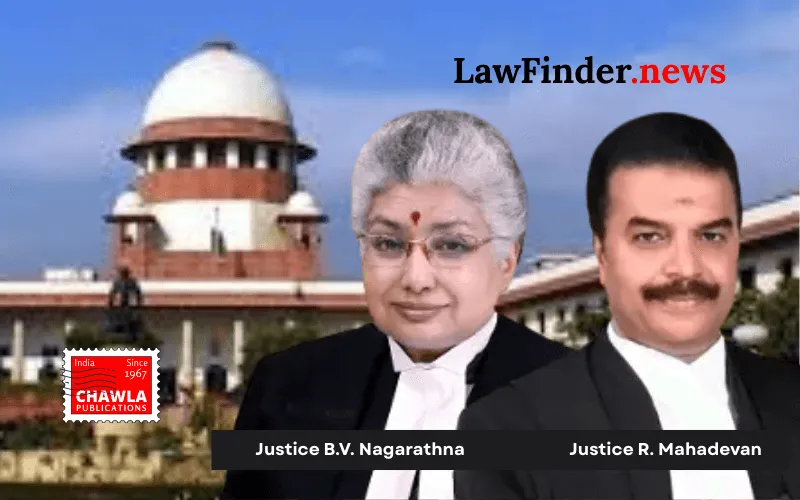
The Supreme Court, led by Justices B.V. Nagarathna and R. Mahadevan, highlighted the failure of the High Court to consider the gravity of the offences, threats to witnesses, and the criminal antecedents of the accused while granting bail. The judgment emphasized that the initial bail was cancelled due to significant threats to the fairness of the trial and intimidation of witnesses, factors that were overlooked in the subsequent bail decision.
Moreover, the Supreme Court criticized the High Court's direction for a joint trial of the two distinct criminal cases, underscoring that such a decision should be made at the outset of proceedings with due consideration to statutory requirements and potential prejudice to the accused. The Court stressed that joint trials are an exception rather than the norm, and the High Court's directive was legally unsustainable.
The Supreme Court's ruling mandates the accused to surrender before the jurisdictional trial court within two weeks, failing which legal measures will be taken to secure their custody. The trial court has been directed to conduct the trial independently and on merits, without being influenced by external directives.
This judgment reaffirms the procedural safeguards provided under the SC/ST (Prevention of Atrocities) Act, ensuring that victims' rights are upheld and justice is served without prejudice.
Bottom Line:
Victim's right to be heard under Section 15A(5) is mandatory but does not guarantee a favorable outcome. However, bail granted ignoring prior cancellation and abuse of liberty, without addressing gravity of offences, threats to witnesses, and criminal antecedents, is arbitrary and liable to be set aside
Statutory provision(s): Scheduled Castes and Scheduled Tribes (Prevention of Atrocities) Act, 2015 - Section 15A(5); Indian Penal Code - Sections 147, 148, 447, 341, 294(b), 323, 324, 307, 379, 302, 506(ii); Criminal Procedure Code, 1973 - Sections 218, 219, 223; Bharatiya Nagarik Suraksha Sanhita, 2023 - Section 242.