Court Sets Aside Termination for Suppression of Minor Offences, Highlights Social and Economic Factors in Character Assessment
In a significant ruling, the Sikkim High Court has set aside the termination of Vikash, a Constable (Washerman) in the Sashastra Seema Bal (SSB), emphasizing a reformative approach towards minor criminal offences in public employment. Vikash, a young recruit from an economically disadvantaged background, was dismissed for not disclosing involvement in two minor crimes, both of which resulted in acquittal.
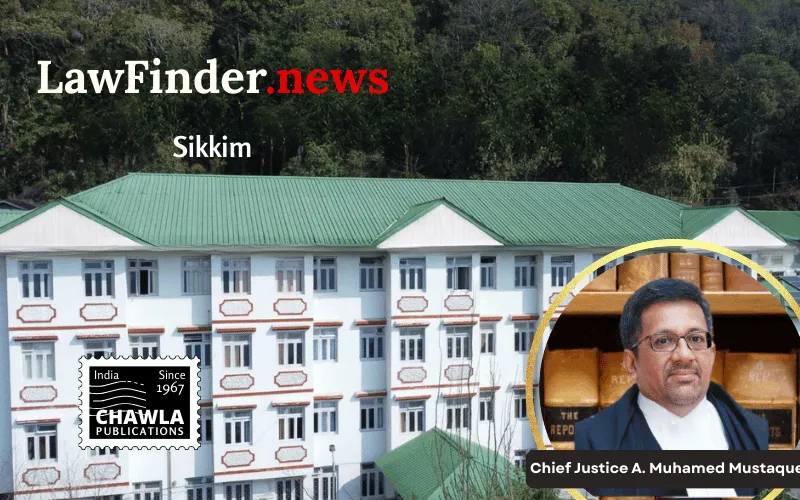
The judgment, delivered by Chief Justice A. Muhamed Mustaque, underscored that suppression of minor offences, particularly those ending in acquittal or deemed trivial, should not automatically lead to termination. It emphasized the necessity of considering the socio-economic background of candidates and aligning character assessments with constitutional goals of equality.
The court referenced precedents, including the Supreme Court's decision in Avtar Singh v. Union of India, which permits employers to condone such lapses, especially when the offences do not impact the candidate's suitability for the post. The court noted that Vikash's involvement in the two cases—one found to be false and the other settled amicably—did not constitute significant misconduct warranting dismissal.
Highlighting the broader constitutional context, the court stated that public employment assessments must account for social inequalities and the disadvantages faced by economically weaker sections. The ruling stressed that a nuanced approach is necessary, especially for posts with no significant discretionary authority, like that of a Constable (Washerman).
The judgment also delved into the psychological impact of socio-economic status on behavior, drawing from academic insights to reinforce its stance on character assessment. The court concluded by quoting Oscar Wilde, emphasizing the potential for reform and future prospects for individuals with past misdemeanors.
While the court reinstated Vikash, it declined claims for arrears post-termination, directing that any pending dues prior to the termination be settled within three weeks. This decision marks a pivotal step in reinforcing a compassionate and equitable approach in public employment, particularly for those from marginalized backgrounds.
Bottom Line:
The suppression of involvement in minor criminal offences does not automatically justify termination of employment in public service, particularly when such offences were trivial or resulted in acquittal. The social and economic background of candidates must be considered, and character assessment should align with constitutional goals of equality and amelioration.
Statutory provision(s): Indian Penal Code (IPC), 1860 Sections 380, 457, 323, 504, 506
Vikash v. Union of India, (Sikkim) : Law Finder Doc id # 2863618