Supreme Court Upholds Tribunal's Order Against State of Andhra Pradesh, Supreme Court Allows Appeal, Directs Compliance with Tribunal's Order on Employee Benefits
In a landmark decision, the Supreme Court of India has ruled in favor of B. Yerraji and others, directing the State of Andhra Pradesh and the Visakhapatnam Municipal Corporation to comply with an order from the Andhra Pradesh Administrative Tribunal dated July 20, 2012. The Supreme Court's decision comes as a significant relief to the appellants, who are Grade-IV employees, seeking the implementation of benefits that were granted to them by the Tribunal.
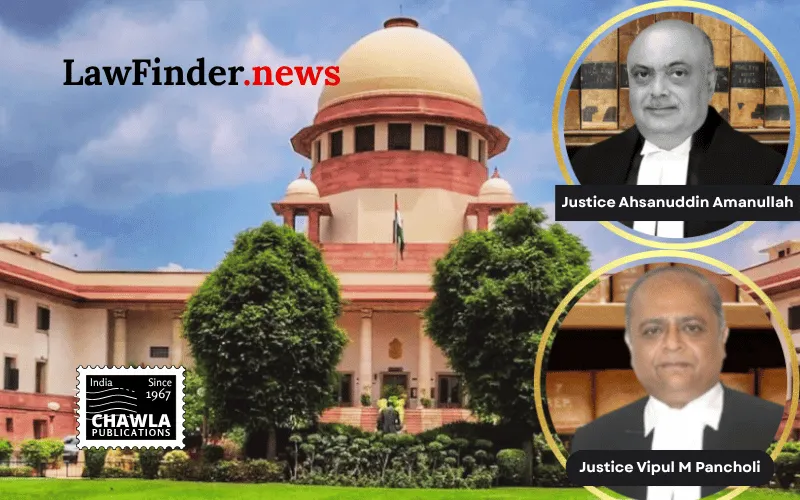
The case, titled "B. Yerraji v. State of Andhra Pradesh," was heard by a bench comprising Justices Ahsanuddin Amanullah and Vipul M. Pancholi. The appellants were represented by Senior Advocate Mr. V. Chitambaresh, while the State and Municipal Corporation were represented by Senior Advocate Mr. L. Narasimha Reddy and others.
The Supreme Court criticized the respondents for their failure to comply with the Tribunal's order, emphasizing that the State must act as a model employer and cannot refuse to implement judicial orders by exploiting procedural delays. The Court highlighted that systemic delays cannot defeat a litigant's cause and that fresh causes of action arise every month due to non-payment of monthly dues.
The appellants had initially filed a writ petition in the High Court of Andhra Pradesh, which was dismissed on grounds of suppression of material facts. However, the Supreme Court noted that the suppressed facts were not material to the determination of the case, allowing the appeal and directing the State to fulfill its obligations under the Tribunal's order within four months.
The judgment underscores the importance of judicial compliance by state authorities and reinforces the principle that systemic inefficiencies should not hinder the delivery of justice.
Bottom Line:
Suppression or non-disclosure of material facts by litigants can disqualify them from relief; however, the court must examine whether the suppressed facts are material for the determination of the case or would affect the merits of the relief sought.
Statutory provision(s): Article 226 of the Constitution of India, Service Law principles regarding the execution of Tribunal's orders, principles of judicial discretion in cases of suppression of facts.
B. Yerraji v. State of Andhra Pradesh, (SC) : Law Finder Doc id # 2899668