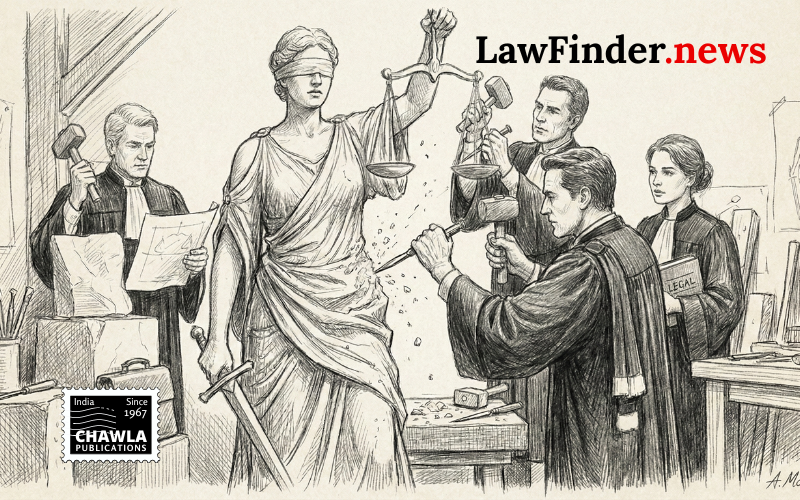
Supreme Court Rules That “After the Father” in Section 6(a) of the Act Means “In Absence Of,” Upholding Gender Equality and Welfare of the Minor as Paramount
In a landmark judgment delivered on February 17, 1999, the Supreme Court of India in the combined writ petitions of Githa Hariharan v. Reserve Bank of India and Dr. Vandana Shiva v. Jayanta Bandhopadhyaya, has clarified the interpretation of Section 6(a) of the Hindu Minority and Guardianship Act, 1956 (HMG Act) regarding the guardianship rights of mothers over their minor children. The Court held that the phrase “the father, and after him, the mother” does not mean that a mother can act as a natural guardian only after the death of the father. Instead, it means “in the absence of” the father, which includes situations where the father is incapable, unwilling, or absent in the care of the minor’s person or property.
The petitioners challenged the Reserve Bank of India’s refusal to accept a deposit application for a 9% Relief Bond in the name of their minor son, signed only by the mother as natural guardian. The RBI insisted on the father’s signature or a guardianship certificate from a competent authority, relying on a literal interpretation of Section 6(a) of the HMG Act which gives preferential guardianship rights to the father during his lifetime. The petitioners argued this discriminated against the mother on grounds of sex and violated Articles 14 and 15 of the Constitution, which guarantee equality and prohibit discrimination.
The Court examined the legislative intent behind Section 6(a), noting that the Parliament could not have intended to violate constitutional guarantees of gender equality. The Court emphasized that the welfare of the minor child is the paramount consideration in guardianship matters. It harmoniously construed the word “after” as referring to the absence of the father from care of the minor, rather than only after his death. This interpretation aligns with the principles of the Convention on the Elimination of All Forms of Discrimination Against Women (CEDAW), to which India is a signatory, and the Beijing Declaration.
The judgment cited previous Supreme Court rulings such as Jijabai Vithalrao Gajre v. Pathankhan, which recognized that where the father is indifferent or absent, the mother may be considered the natural guardian. The Court also distinguished the Pannilal v. Rajinder Singh case on its facts, reaffirming the welfare-centric approach.
The Court directed the Reserve Bank of India and other similar organizations to formulate suitable procedures to accept applications from mothers acting as natural guardians when the father is absent or unable to act. It clarified that this ruling applies prospectively and will not invalidate past transactions where the mother acted without the father’s consent.
This judgment marks a significant step towards gender equality in guardianship laws by recognizing the mother’s equal status as natural guardian alongside the father, ensuring the best interests of the child are served without gender bias. The matter of custody and guardianship in ongoing disputes will continue to be decided by courts based on the welfare principle.
Statutory provisions: Hindu Minority and Guardianship Act, 1956 - Sections 4, 6(a); Guardian and Wards Act, 1890 - Section 19(b); Constitution of India - Articles 14, 15, 32
Githa Hariharan v. Reserve Bank of India, (SC) : Law Finder Doc Id # 28917



