Court Holds Extended Imprisonment Violates Articles 19(d) and 21 of Constitution; State Held Vicariously Liable for Officials’ Lapses
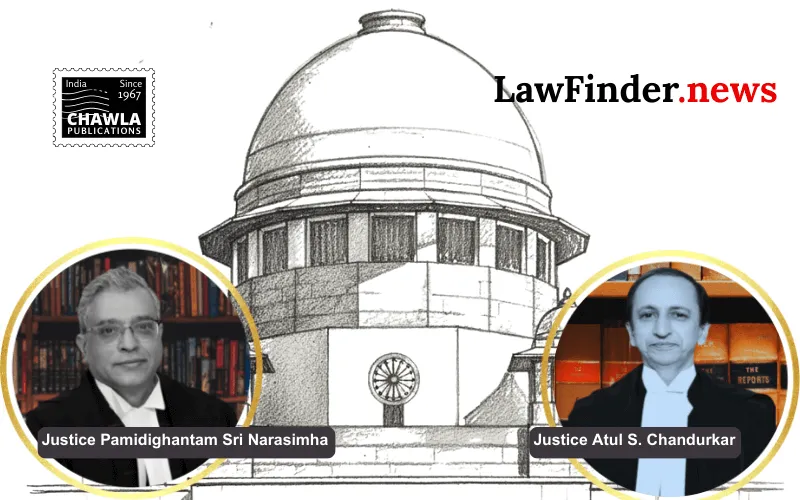
In a landmark judgment delivered on May 9, 2022, the Supreme Court of India in the case of Bhola Kumhar v. State of Chhattisgarh has emphatically ruled that detention of a convict beyond the period of the sentence awarded by the Court is illegal and amounts to a violation of fundamental rights guaranteed under Articles 19(d) and 21 of the Constitution of India. The Court held that such unlawful deprivation of personal liberty entitles the aggrieved convict to compensation, ordering the State of Chhattisgarh to pay Rs.7.5 lakhs to the appellant, Bhola Kumhar.
The case arose after Bhola Kumhar, convicted under Section 376 of the Indian Penal Code and provisions of the Scheduled Castes and Scheduled Tribes (Prevention of Atrocities) Act, 1989, was sentenced to rigorous imprisonment. While the High Court confirmed his conviction, it reduced the sentence from 12 years to 7 years. However, despite serving the lawful sentence period, Kumhar was detained in prison for over 10 years due to lapses by jail authorities and administrative failure to update records and release him timely.
The Supreme Court observed that while the State government is vicariously liable for the wrongful acts or omissions of its officials, the illegal incarceration beyond the judicially sanctioned sentence period was a grave injustice causing mental agony and violation of the convict’s fundamental rights to personal liberty and freedom of movement. The Court noted that remission rules entitle convicts to reduced incarceration periods and that the jail authorities had failed to account for this in the appellant’s detention.
The Court referred to precedents such as Rudul Sah v. State of Bihar and underscored that a convict’s detention sans lawful sanction is akin to imprisonment without legal authority, infringing constitutional guarantees. It further clarified that compensation is a just and proper relief under Article 136 and Article 142 of the Constitution, empowering the Court to remedy manifest illegality and injustice.
Rejecting the State’s explanation that the extended detention was due to non-payment of compensation to the victim, the Court held that such imprisonment beyond the appellate court’s sentence, especially without due remission consideration, is unlawful. It emphasized that the State must initiate appropriate action against officials responsible for such lapses while ensuring justice to the victim is not compromised.
This ruling sends a strong message that the fundamental rights of convicts must be respected, and any excess detention will attract liability and compensation. It also highlights the need for prompt administrative compliance with judicial orders to prevent miscarriages of justice.
Statutory provisions
Indian Penal Code Section 376, Scheduled Castes and Scheduled Tribes (Prevention of Atrocities) Act 1989 Sections 3(ii)(v), 3(1)(xii), Code of Criminal Procedure Sections 357, 386, Constitution of India Articles 19(d), 21, 136, 142
Bhola Kumhar v. State Of Chhattisgarh (SC) : Law Finder Doc Id # 2011751