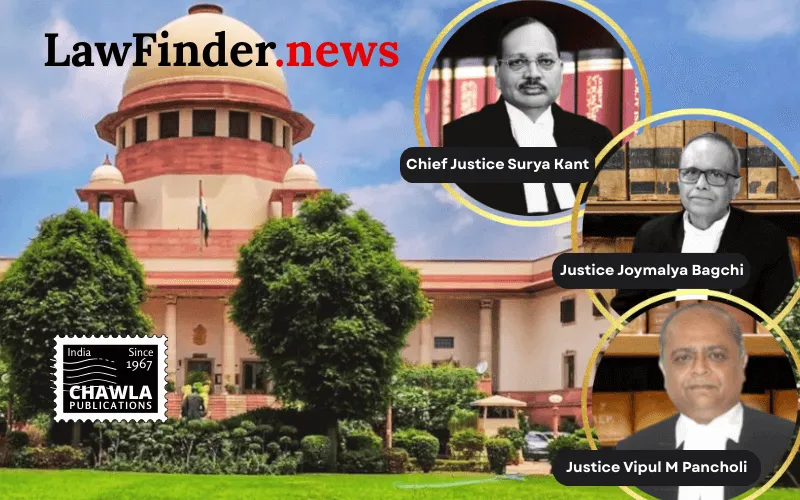
In a significant ruling, the Supreme Court permits courts to proceed with cases involving the now-repealed Section 124A of the IPC if the accused raises no objections.
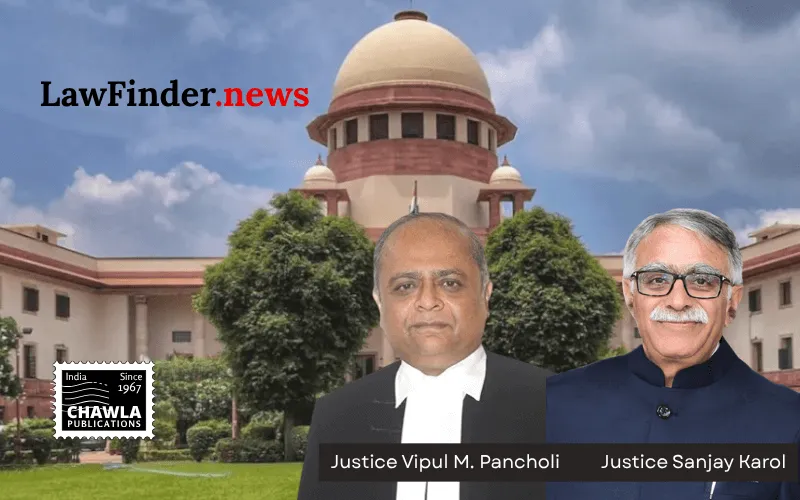
In a noteworthy judgment delivered on May 21, 2026, the Supreme Court of India provided crucial clarification regarding cases involving Section 124A of the Indian Penal Code (IPC), now repealed and replaced by the Bharatiya Nyaya Sanhita. The bench, comprising Chief Justice Surya Kant and Justices Joymalya Bagchi and Vipul M. Pancholi, addressed the legal quandary surrounding the adjudication of cases where this controversial sedition charge is involved.
The case in question was brought before the Supreme Court as a Special Leave Petition (Criminal) by Kamran, the petitioner, against the State of Madhya Pradesh. Kamran, who had been convicted under multiple sections including the contentious Section 124A, had his appeal pending in the Madhya Pradesh High Court, Indore Bench.
Historically, the Supreme Court, in an interim order dated May 11, 2022, had stalled all trials, appeals, and proceedings related to Section 124A IPC. This was part of a broader judicial review concerning the constitutionality of the sedition law, with the court directing that pending cases be kept in abeyance unless proceeding with other charges did not prejudice the accused.
However, in this recent ruling, the Supreme Court clarified that if the accused consents, there is no barrier to courts proceeding with trials or appeals on the merits of the case, even if they involve charges under Section 124A IPC. This decision came after Kamran expressed no objection to his criminal appeal being heard in its entirety, including the sedition charge.
The Supreme Court's clarification underscores the ability of courts to proceed with cases if the accused does not object, thereby resolving a key impediment faced by lower courts in adjudicating pending cases under the now-repealed section. The court emphasized that the adjudication should be in accordance with the law and that no prejudice should be caused to the accused.
The bench requested the Madhya Pradesh High Court (Indore Bench) to take up Kamran's Criminal Appeal No. 972/2017, along with all other connected appeals, and decide them on their merits. The Supreme Court, however, refrained from expressing any opinion on the merits of the case itself.
This ruling is significant as it provides a pathway for resolution in numerous cases stalled due to the pending constitutional review of Section 124A IPC. It also reflects the judiciary's adaptability in handling legal ambiguities surrounding repealed or contentious statutory provisions.
Bottom Line:
Clarification provided by the Supreme Court regarding the adjudication of cases involving Section 124A of IPC (now repealed and substituted by Bharatiya Nyaya Sanhita) where the accused raises no objection to proceedings.
Statutory provision(s): Section 124A of IPC, Unlawful Activities (Prevention) Act, 1967, Arms Act, 1959, Bharatiya Nyaya Sanhita.
Kamran v. State of Madhya Pradesh, (SC) : Law Finder Doc id # 2905871