Supreme Court reverses Delhi High Court's dismissal, recognizing AFGIS as 'State' due to deep governmental control and public duties.
In a landmark judgment delivered on March 12, 2026, the Supreme Court of India has classified the Air Force Group Insurance Society (AFGIS) as a 'State' under Article 12 of the Constitution of India. This decision overturns a previous ruling by the Delhi High Court, which had dismissed writ petitions filed by employees of AFGIS seeking pay parity and other benefits in line with Central Government employees.
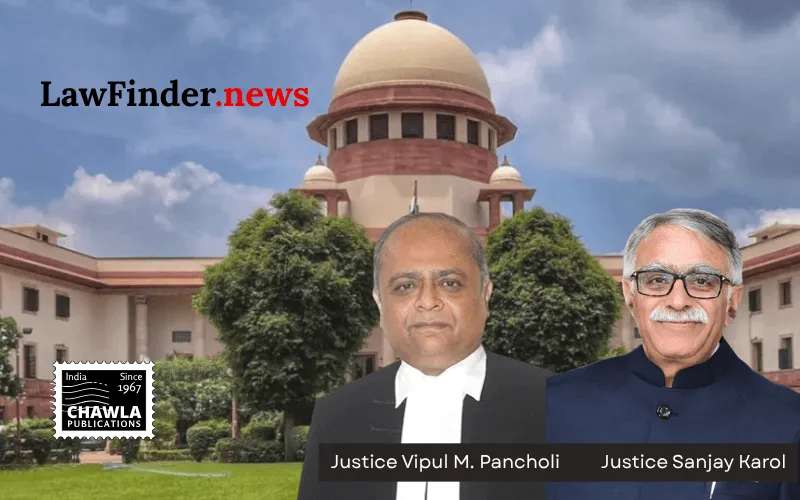
The bench, comprising Justices Sanjay Karol and Vipul M. Pancholi, ruled that AFGIS, although registered under the Societies Registration Act, 1860, exhibits significant governmental control and performs public functions, thereby meeting the criteria to be classified as a 'State'. The court observed that the society is administered by serving Indian Air Force officials and its membership is compulsory for all Air Force personnel. It also noted that the financial contributions are mandatorily deducted from the salaries of the members, indicating deep financial integration with the government.
The Supreme Court emphasized the importance of AFGIS's role in providing insurance coverage to armed forces personnel, describing it as a public duty. The court stated that the welfare of armed forces personnel is a fundamental government function, as their service is closely tied to national sovereignty and security. By providing insurance, AFGIS fulfills a critical aspect of this governmental responsibility, offering protection and security to service members and their families.
The court also highlighted that AFGIS, in certain communications, had identified itself as part of the government to claim exemptions from service taxes. This acknowledgment further supported the view of AFGIS being a government entity.
The ruling restores the writ petitions to the Delhi High Court for adjudication on merits, providing the appellants with an opportunity to seek redressal for their grievances regarding pay scales and service conditions. The Supreme Court has urged the High Court to expedite the proceedings, considering the long-pending nature of the case.
This judgment sets a precedent for other autonomous bodies performing similar functions, as it reinforces the application of the cumulative test of financial, functional, and administrative control to determine their status under Article 12.
Statutory provision(s): Constitution of India, 1950 Article 12, Constitution of India, 1950 Article 226
Ravi Khokhar v. Union of India, (SC) : Law Finder Doc id # 2866815