Landmark Decision Clarifies Experience Requirements Under Article 233 of the Indian Constitution
In a significant development, the Supreme Court of India, through its Constitution Bench, has delved into the intricate eligibility criteria concerning appointments as District Judges under Article 233 of the Indian Constitution. The judgment, dated September 12, 2025, addresses crucial questions that have long been a subject of debate among legal professionals and judicial aspirants.
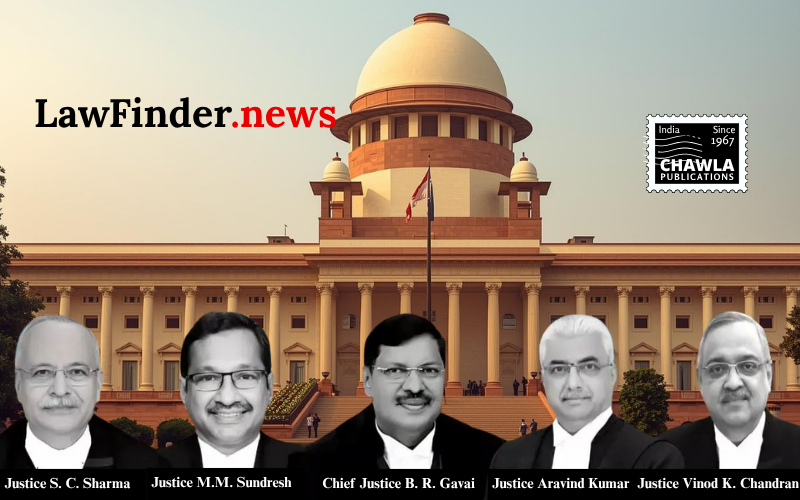
The case, titled "Rejanish K.V v. K. Deepa," brings to the forefront the eligibility parameters for individuals in the judicial service of the Union or State, and the requisite experience for advocates aspiring to become District Judges. The bench, led by Chief Justice B.R. Gavai, alongside Justices M.M. Sundresh, Aravind Kumar, Satish Chandra Sharma, and K. Vinod Chandran, has framed two pivotal issues for consideration.
Firstly, the judgment examines whether Article 233(2) prescribes any specific eligibility for judicial service members seeking appointment as District Judges. Secondly, it explores whether a person with a combined experience of seven years, serving as a Civil Judge and as an advocate, qualifies for the appointment under Article 233.
The Supreme Court has scheduled further arguments on these matters, with hearings set to commence on September 23, 2025. The legal community is keenly observing the developments, as the implications of this judgment could reshape the framework for judicial appointments in India.
The court has outlined a structured approach for the upcoming hearings, designating Nodal Counsel for different sides to ensure efficient time management and presentation of arguments. Shri Ajay Kumar Singh will represent the proponents of allowing judicial service members to appear directly for District Judge appointments, while Shri John Mathew will lead the opposition.
In its order, the Supreme Court has mandated adherence to a strict time schedule for arguments and compilation of documents, emphasizing procedural efficiency. This judgment underscores the judiciary's commitment to clarifying constitutional provisions and ensuring transparency in judicial appointments.
The decision is poised to have far-reaching effects on the legal landscape, impacting both current judicial officers and aspiring advocates. As the legal fraternity prepares for the impending hearings, this judgment marks a pivotal moment in the discourse surrounding judicial appointments in India.
Statutory provision(s): Article 233 of the Constitution of India, 1950
Rejanish K.V v. K. Deepa, (SC)(Constitution Bench) : Law Finder Doc Id # 2807600