Landmark Judgment Mandates States to Optimize Use of Open Prisons, Ensure Gender Equality, and Establish Common Minimum Standards for Rehabilitation and Social Reintegration
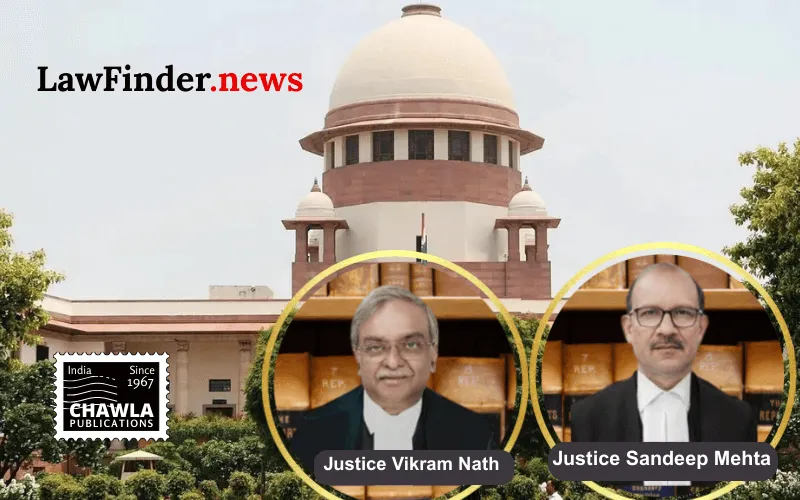
In a significant judgment dated 26th February 2026, the Supreme Court of India, presided over by Justices Vikram Nath and Sandeep Mehta, has issued comprehensive directions aimed at reforming the prison system through the expansion and effective utilization of Open Correctional Institutions (OCIs). The judgment, rendered in the case of Suhas Chakma v. Union of India, underscores the constitutional mandate to treat prisoners with dignity and to promote their rehabilitation and social reintegration, aligning with Articles 14, 15, 21, 22, and 39A of the Constitution of India.
The Court highlighted that prisoners retain their fundamental rights, including the right to life and dignity under Article 21, which must not be compromised during incarceration. Recognizing the chronic overcrowding in closed prisons—operating at an occupancy level exceeding 120% nationally - the Court emphasized OCIs as a humane, reformative, and cost-effective alternative. OCIs allow eligible prisoners graded liberty, enabling them to work, live with family members, and acquire vocational skills, thereby facilitating their eventual reintegration into society.
Empirical data revealed a glaring under-utilization of existing OCI facilities, with occupancy rates as low as 6% in some States, alongside the complete absence of such institutions in several others and most Union Territories. The Court lamented the systemic exclusion and under-representation of women prisoners from OCIs, noting that many States either do not have facilities for women or exclude them from eligibility. Such exclusion was found to violate constitutional guarantees and international standards, including the Bangkok Rules, mandating gender-sensitive reforms.
The Court noted wide disparities in eligibility criteria, rehabilitative facilities, wages, healthcare, education, family integration, and disciplinary regimes across States and Union Territories. It emphasized that many OCIs function more like labor camps than rehabilitation centers, which undermines their transformative potential.
To address these issues, the Supreme Court directed:
1. States lacking OCIs must assess feasibility and establish such institutions or open barracks within existing prisons within three months.
2. All States must develop protocols to fill vacancies in OCIs and ensure optimal utilization of existing facilities.
3. States must ensure non-discriminatory access for women prisoners, creating dedicated facilities where integration is not feasible.
4. Eligibility criteria must be rationalized to focus on reformative potential rather than prolonged incarceration.
5. States must enhance rehabilitative infrastructure including diversified vocational training, fair wages, healthcare, education, and family integration.
6. The constitution of a High-Powered Committee headed by retired Justice S. Ravindra Bhat to formulate Common Minimum Standards governing OCIs nationwide, with a report due within six months.
7. States and Union Territories to constitute Monitoring Committees headed by the Executive Chairperson of the State Legal Services Authority for overseeing compliance and submit quarterly and annual reports to respective High Courts and the Supreme Court.
The Court emphasized that OCIs not only uphold constitutional morality but are also fiscally prudent, citing data from Rajasthan demonstrating drastically lower per-prisoner costs compared to closed prisons.
This judgment reinforces the principle that prison reform is a constitutional obligation rather than executive benevolence. It mandates a shift from punitive incarceration to a rehabilitative justice model, where trust, responsibility, and graded liberty form the foundation for transforming prisoners into responsible citizens.
The Supreme Court has scheduled further hearings for September 2026 and March 2027 to review progress and ensure the directions translate into meaningful reforms.
Statutory provision(s): Articles 14, 15, 21, 22, 39A of the Constitution of India; Model Prison Manual, 2016 Chapter XXIII; Model Prisons and Correctional Services Act, 2023 Sections 2(21) and 50
Suhas Chakma v. Union Of India, (SC) : Law Finder Doc id # 2859179