Judgment addresses constitutional concerns over lack of compensation policy for vaccine-related injuries, emphasizes right to health under Article 21.
In a landmark judgment, the Supreme Court of India has directed the Union of India to formulate a no-fault compensation framework for individuals who suffer serious adverse events following COVID-19 vaccination. This directive comes amidst mounting concerns over the absence of a structured policy to address vaccine-related injuries, which the court found to be in violation of the right to life under Article 21 of the Constitution.
The case, Rachana Gangu & Anr. v. Union of India, arose from multiple petitions filed by families who lost loved ones allegedly due to adverse reactions from COVID-19 vaccines. The court consolidated these petitions, including several cases from the Kerala High Court, to address the broader issue of compensation for vaccine-induced injuries.
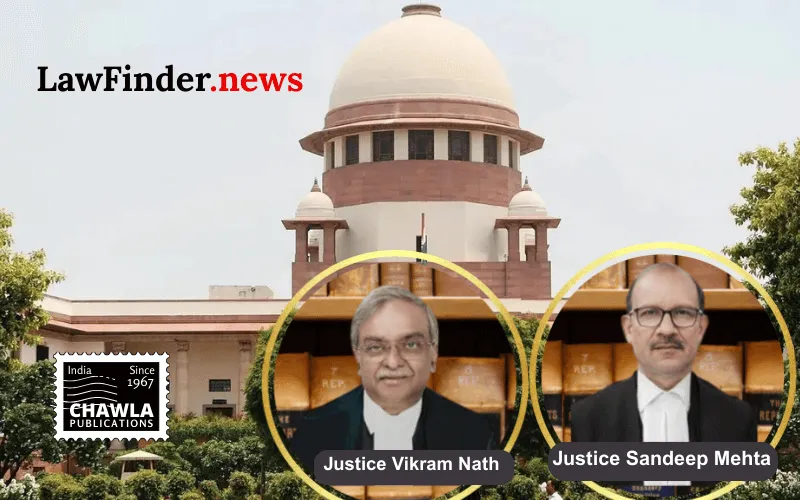
The judgment, delivered by Justices Vikram Nath and Sandeep Mehta, underscored the constitutional obligation of the State to protect the right to health, which extends to providing institutional support for adverse outcomes from state-led public health interventions. The court noted that while the COVID-19 vaccination program was a necessary public health measure, the lack of a uniform compensation policy leaves affected families without adequate recourse.
In its analysis, the court emphasized that the right to health under Article 21 imposes a positive obligation on the State to ensure that individuals who suffer grave harm during such public health interventions are not left without accessible remedies. The court highlighted the principle of no-fault liability, which is recognized globally in vaccine injury compensation schemes, as an appropriate model for addressing the issue.
The judgment also addressed concerns about the adequacy of existing monitoring mechanisms for adverse events following immunization (AEFI). The court directed the Union of India to ensure transparency in AEFI surveillance and to make relevant data publicly accessible. However, it declined to appoint an independent expert body for further investigation, expressing satisfaction with the current framework managed by National and State AEFI Committees.
The Supreme Court's decision marks a significant step towards recognizing and addressing the needs of individuals adversely affected by the COVID-19 vaccination program. The court's directive for a no-fault compensation policy aims to provide a streamlined and equitable avenue for relief, ensuring that affected families receive timely support without the burden of proving negligence.
The judgment clarifies that the formulation of this framework does not imply an admission of liability by the government and does not preclude individuals from seeking other legal remedies. The court's intervention underscores the judiciary's role in upholding fundamental rights and ensuring that public health policies align with constitutional mandates.
Statutory provision(s): Article 21, Article 14, Right to Health, No-Fault Compensation, Judicial Review and Public Health Policy
Rachana Gangu v. Union of India, (SC) : Law Finder Doc id # 2864022