The Apex Court Upholds the Doctrine of Laches, Finds No Violation of Fundamental Rights
In a landmark decision, the Supreme Court of India dismissed the writ petition filed by the Mizo Chief Council, Mizoram, seeking compensation for lands allegedly seized by the government without due recompense. The petition, which has been pending since 2014, was rejected on the grounds of inordinate delay and failure to establish a violation of fundamental rights.
The Mizo Chief Council, representing the tribal chieftains of the erstwhile Lushai Hills district (now Mizoram), argued that their lands were acquired by the State without lawful authority or adequate compensation, breaching their right to property as protected under Articles 19(1)(f) and 31 of the Indian Constitution, prior to their repeal.
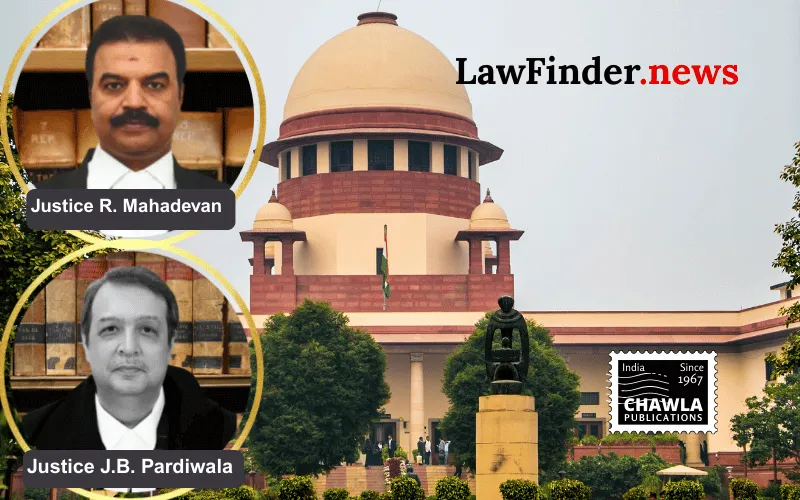
The bench, comprising Justices J.B. Pardiwala and R. Mahadevan, meticulously analyzed the doctrine of delay and laches, emphasizing that it serves as a flexible rule of practice, not a rigid law. The Court reiterated that the adequacy of the explanation for delay is paramount, and unexplained delays can be fatal to petitions under Article 32 of the Constitution.
Despite acknowledging the unique historical and political challenges faced by the Mizo Chiefs, the Court found the petitioner's explanation for the six-decade delay unsatisfactory. The Judges noted that while the Mizo Chiefs had continuously agitated their claims before various forums, including the Gauhati High Court, there was no substantial evidence of absolute ownership of the lands in question. The Court further highlighted the absence of a comprehensive historical investigation or compelling documentary proof to support the claims.
The petitioner's plea of discrimination, comparing themselves to the rulers of erstwhile Princely States, was also dismissed as legally untenable. The Court clarified that the privileges enjoyed by Princely State rulers were based on specific political agreements, not constitutional rights.
Ultimately, the Supreme Court held that the Mizo Chief Council failed to establish any violation of fundamental rights, leading to the dismissal of their petition. The ruling underscores the Court's commitment to balancing historical justice with procedural fairness, particularly in cases involving long-standing claims.
Bottom Line:
Doctrine of Delay and Laches - In the context of petitions under Article 32, the doctrine of laches operates as a flexible rule of practice rather than a rigid rule of law and its application is anchored in sound judicial discretion based on the specific facts and circumstances of each case.
Statutory provision(s): Article 32, Article 19(1)(f), Article 31, Constitution (Forty-Fourth Amendment) Act, 1978, Assam Lushai Hills District (Acquisition of Chief's Rights) Act, 1954
Mizo Chief Council Mizoram v. Union of India, (SC) : Law Finder Doc id # 2865494