Reliance on Non-Existent Judgments Sparks Call for Judicial Accountability
In a landmark ruling addressing the integrity of the judicial process, the Supreme Court of India has taken a significant step by identifying the use of AI-generated, non-existent judgments in the adjudication process as misconduct. The case in question, Gummadi Usha Rani v. Sure Mallikarjuna Rao, has brought to the fore serious concerns about the reliance on synthetic judgments, which the court declared impacts the integrity of the adjudicatory process.
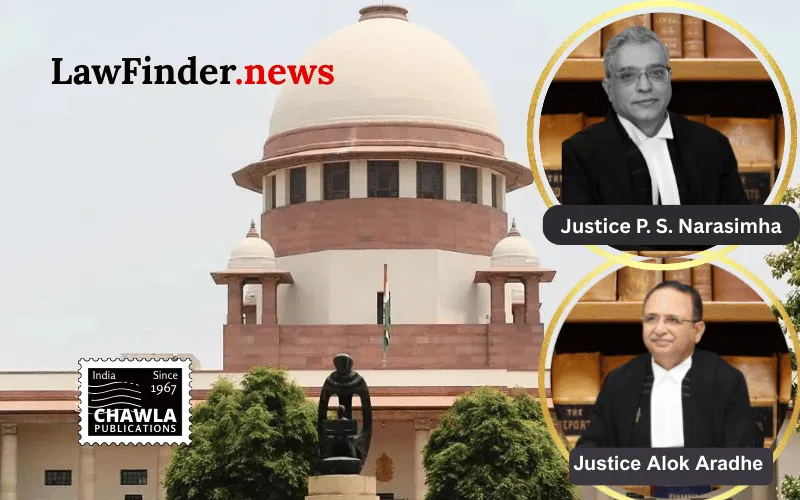
The Supreme Court bench, comprising Justices Pamidighantam Sri Narasimha and Alok Aradhe, was approached by the petitioners, Gummadi Usha Rani and Anr., who challenged the reliance of the Trial Court on judgments that were allegedly non-existent and AI-generated. The Trial Court's decision, dated August 19, 2025, dismissed objections raised by the petitioners and relied on several judgments including Subramani v. M. Natarajan, Chidambaram Pillai v. SAL Ramasamy, Lakshmi Devi v. K. Prabha, and Gajanan v. Ramdas. However, these judgments were later discovered to be artificially generated.
The Supreme Court took cognizance of this issue, emphasizing that such reliance is not merely an error in decision-making but constitutes misconduct. "This has a direct bearing on the integrity of the adjudicatory process," the court observed, underscoring the necessity for examining the consequences and ensuring accountability.
Pending the disposal of the Special Leave Petition, the Supreme Court has directed the Trial Court to refrain from proceeding based on the Advocate Commissioner's Report, which was also challenged for relying on AI-generated judgments. This interim order signifies the court’s commitment to maintaining judicial integrity while the matter is thoroughly examined.
To address the broader implications of this issue, the Supreme Court has issued notices to the Attorney General, Solicitor General, and the Bar Council of India. Furthermore, Mr. Shyam Divan, a senior counsel, has been appointed to assist the court in this matter, highlighting the seriousness with which the court is approaching this unprecedented challenge.
The case has prompted a crucial dialogue on the role of AI in the legal field, emphasizing the need for vigilance and due diligence in the use of technology within the judicial system. As the legal community and the public await further developments, this case serves as a pivotal moment in reinforcing the standards of judicial accountability and integrity.
Bottom Line:
Use of non-existent and AI-generated judgments in judicial process constitutes misconduct and directly impacts the integrity of the adjudicatory process.
Statutory provision(s): Judicial Process Integrity.
Gummadi Usha Rani v. Sure Mallikarjuna Rao, (SC) : Law Finder Doc id # 2860521