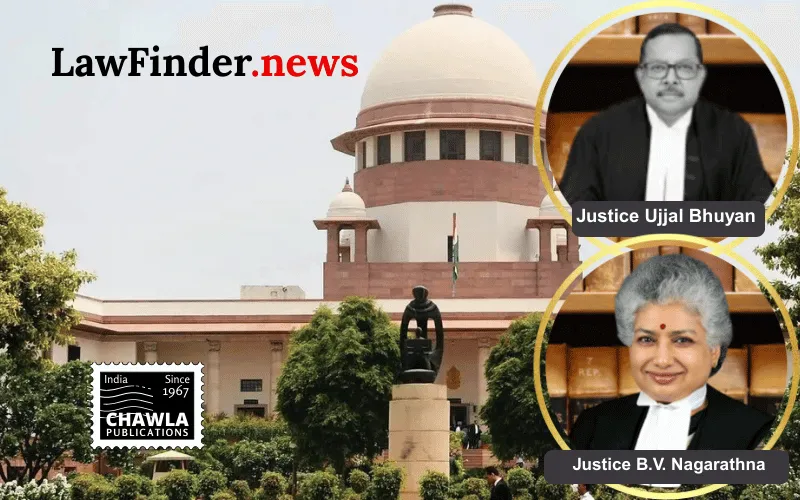
Stopgap Arrangement Ordered to Maintain Balance of Judicial and Expert Members in NGT
In a significant move, the Supreme Court of India has intervened to prevent a potential judicial vacuum in the National Green Tribunal (NGT) by directing a temporary measure to ensure the continued presence of judicial members. The decision was rendered on February 11, 2026, in response to a writ petition filed by the NGT Bar Association (Western Zone) against the Union of India. The court's order comes amidst concerns that the NGT, a critical body for environmental justice in India, might be left functioning without the required judicial oversight due to the impending retirements of several judicial members.
The Supreme Court bench comprising Justices B.V. Nagarathna and Ujjal Bhuyan highlighted the necessity of maintaining a balance between judicial and expert members as mandated by Section 4(4) of the National Green Tribunal Act, 2010. The Act stipulates that the number of expert members must be equal to the number of judicial members hearing applications and appeals, ensuring a balanced adjudicative process.
The court noted that three judicial members were due to retire between March and April 2026, leaving the NGT with only one judicial member. This scenario, the court observed, would contravene the statutory requirement and potentially disrupt the tribunal's functioning across its five zonal benches in the country.
Addressing these concerns, the Supreme Court ordered a stopgap arrangement wherein Justices Arun Kumar Tyagi, Pushpa Sathyanarayana, and Dinesh Kumar Singh would continue to serve as judicial members until new appointments are made. This decision aims to prevent any disruption in the tribunal's operations and safeguard the interests of litigants seeking justice in environmental matters.
The court's decision also reflects the directives issued in the landmark 2025 judgment of the Madras Bar Association case, which emphasized the establishment of a National Tribunal Commission to oversee tribunal appointments and operations. The Union of India, represented by Additional Solicitor General Vikram Banerjee, informed the court of ongoing efforts to implement these directives.
This interim measure underscores the judiciary's proactive approach in ensuring that statutory bodies like the NGT remain fully functional and effective in addressing environmental disputes. The Supreme Court's intervention is expected to maintain the tribunal's operational integrity while the government works on long-term solutions for judicial appointments.
Statutory provision(s): National Green Tribunal Act, 2010, Section 4(4); Tribunal Reforms Act, 2021
NGT Bar Association (Western Zone) v. Union of India, (SC) : Law Finder Doc id # 2853476